The Great Molasses Flood
On January 15, 1919, a storage tank in Boston's North End collapsed and released 2.3 million gallons of molasses in a wave that reached speeds of 35 miles per hour. The wall of sticky brown liquid, estimated at 25 feet high at its peak, swept through the neighborhood and killed 21 people.
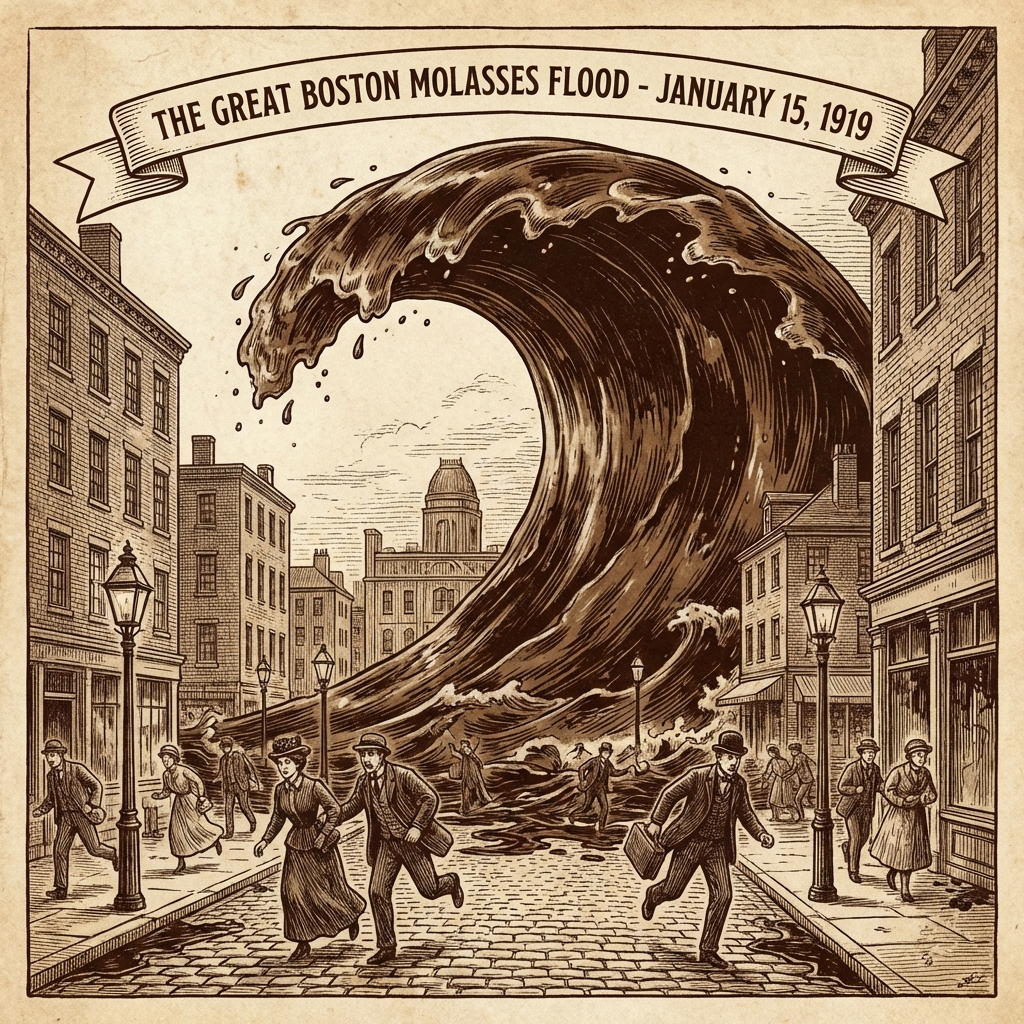
The tank belonged to Purity Distilling Company, who used molasses to produce industrial alcohol. Built hastily in 1915, the tank had shown warning signs for years. Residents reported that it groaned and leaked so regularly that local children would collect the drippings with sticks. The company's response was to paint the tank brown so the leaks would be less visible.
When the tank finally gave way on that unusually warm winter afternoon, the wave demolished buildings, knocked a fire station off its foundation, and threw a truck into Boston Harbor. Rescue efforts were hampered by the molasses itself, which made everything and everyone impossibly sticky. Horses stuck in the goo had to be shot by police who couldn't free them.
The aftermath took weeks to clean. Firefighters sprayed salt water from the harbor to dissolve the molasses, which then ran into the gutters and colored the harbor brown until summer. The smell of molasses lingered in the North End for decades, particularly on hot days.
The subsequent lawsuit lasted six years and involved 3,000 witnesses. Purity's parent company, United States Industrial Alcohol, initially blamed anarchists for bombing the tank. The auditor appointed by the court ultimately concluded the company had been negligent in the tank's construction. The disaster led to stricter building codes and engineering standards across the country, including requirements that engineers certify their plans.
The intersection where the tank stood, now a park, still carries a faint sweet smell when the temperature rises.
Filed under Disasters & Drama, America, QuirkyFurther reading: Wikipedia
Print it for the office looPick your next sheet
Judge a story by its emoji. No peeking at titles.