The Exploding Whale of Florence, Oregon
On November 9, 1970, a 45-foot sperm whale washed ashore near Florence, Oregon. The carcass weighed eight tons and was already decomposing. The Oregon State Highway Division, responsible for state beaches, was called in to remove it.
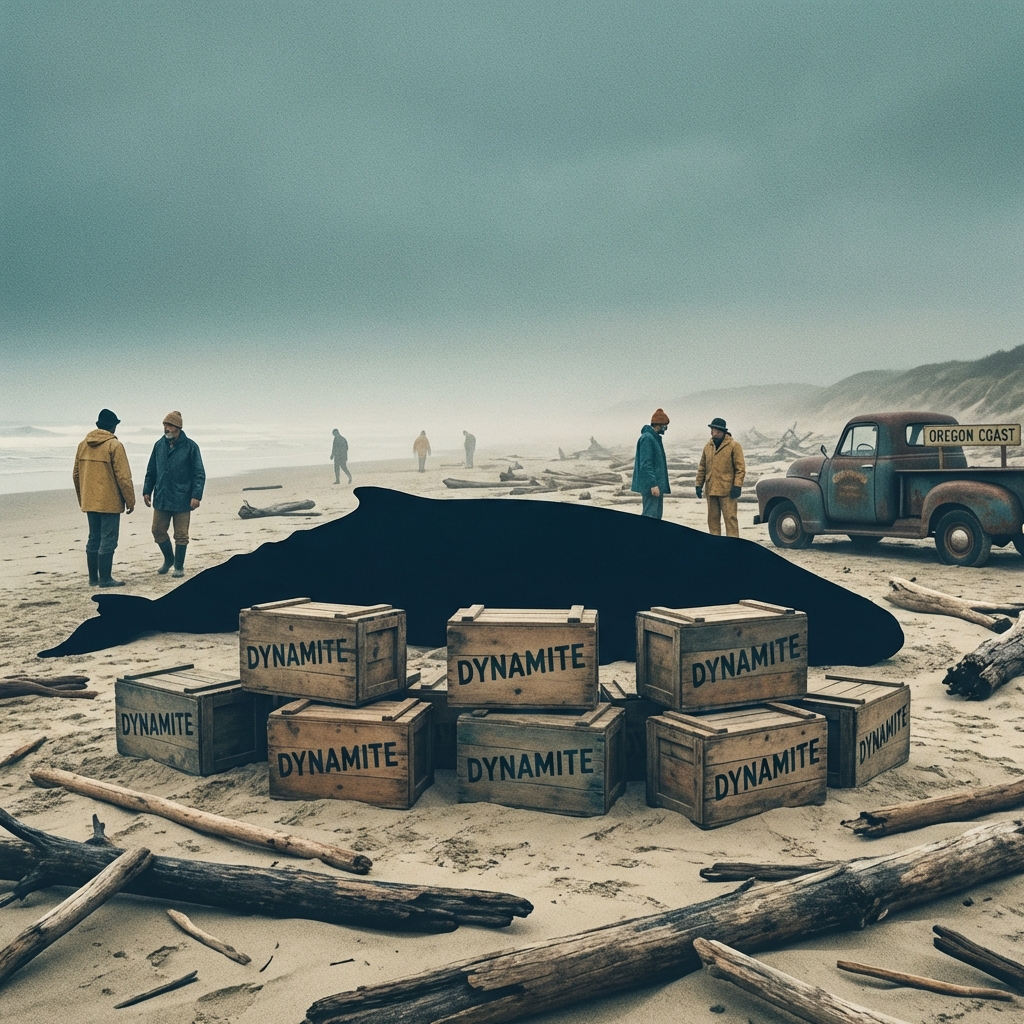
Burying the whale seemed impractical—the beach was sandy and waves might uncover it. Towing it out to sea risked it washing back. Cutting it up manually would take forever and be extremely unpleasant. After consulting with the Navy, Assistant District Highway Engineer George Thornton settled on dynamite. The idea was to blow the carcass into small enough pieces that seagulls and other scavengers would clean up the remains.
A military veteran with explosives training happened to be in the area and warned that twenty cases of dynamite was far too much. Twenty sticks would suffice, he said. His advice was ignored.
On November 12 at 3:45 p.m., half a ton of dynamite detonated beneath the whale. KATU television reporter Paul Linnman, who had initially resented being assigned to cover what seemed like a novice story, was on the scene with cameraman Doug Brazil. Linnman later described the scene with the phrase "the blast blasted blubber beyond all believable bounds."
The explosion sent chunks of whale flesh 800 feet in every direction. A massive piece of blubber crushed a car parked a quarter mile away. Screaming spectators fled as rotting meat rained down around them. The smell lingered for days. Most of the whale, meanwhile, remained intact on the beach. Highway workers still had to haul away the bulk of the carcass by hand.
The footage was mostly forgotten until humor columnist Dave Barry wrote about it in the Miami Herald in 1990, prompting renewed interest. The video later became one of the internet's earliest viral sensations, viewed an estimated 350 million times across various websites.
Florence now celebrates Exploding Whale Day annually. A memorial park bears the incident's name.
Filed under Animals & Nature, America, QuirkyFurther reading: Wikipedia
Print it for the office looPick your next sheet
Judge a story by its emoji. No peeking at titles.