Why Carrots Are Orange
Before the late 16th century, most carrots were purple, white, or yellow.
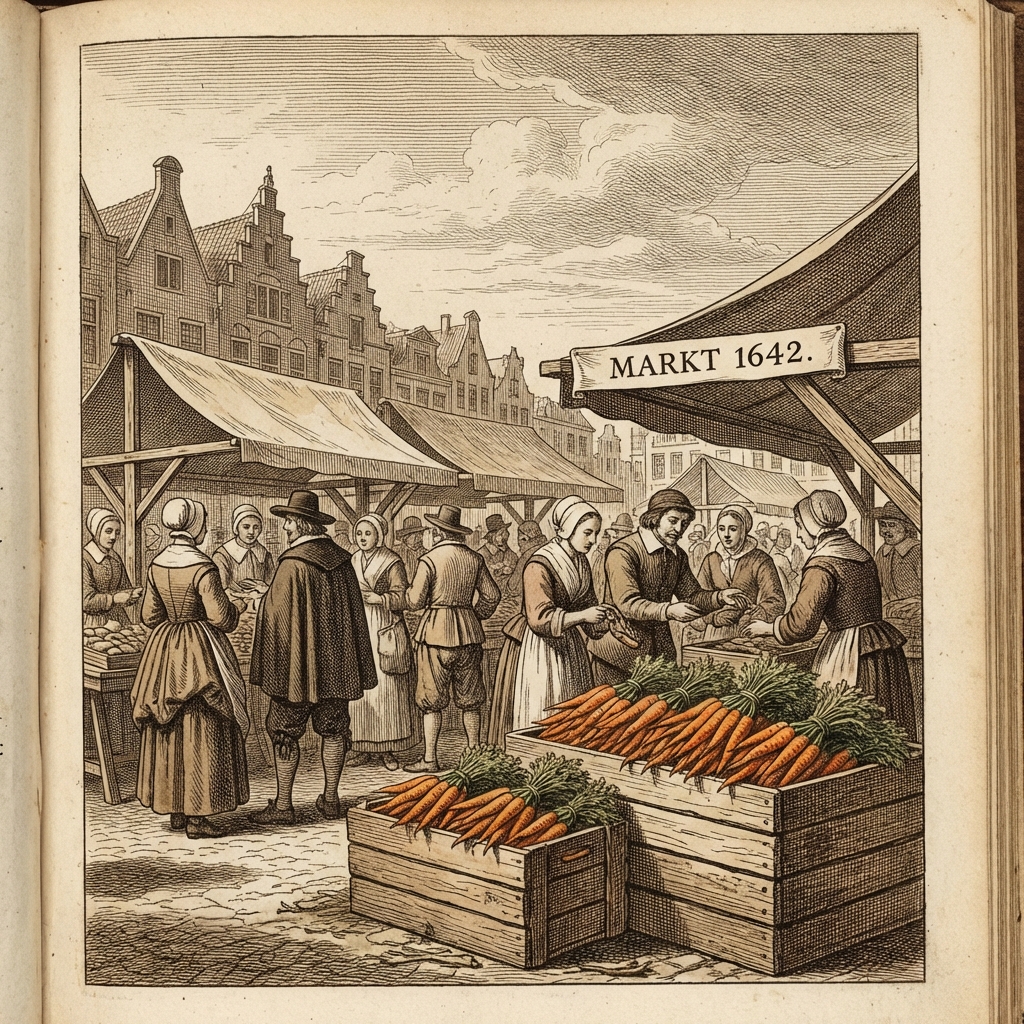
The orange carrot that dominates produce sections worldwide is essentially a Dutch invention, bred into existence in the 1600s, though the exact reasons remain a matter of historical debate.
The conventional story holds that Dutch growers bred orange carrots to honor William of Orange, the leader of the Dutch independence movement against Spain. It's a satisfying tale of nationalist vegetable engineering, and orange did become strongly associated with Dutch identity. But the timeline doesn't quite work. Orange carrots appear in Spanish and German paintings from before William's birth, and seed catalogs from the period suggest orange varieties already existed as a minor strain.
What the Dutch actually did was systematize carrot breeding in ways that hadn't been done before. The agricultural region around Hoorn became a center for developing more stable, sweeter varieties, and the orange ones happened to be among the most successful. They stored better, tasted milder, and didn't stain cooking pots the way purple carrots did. Dutch traders then spread these varieties throughout Europe and eventually the colonies.
The orange pigment comes from beta-carotene, which the body converts to vitamin A. Purple carrots contain anthocyanins instead, the same compounds that make blueberries blue. Yellow and white varieties have little of either. By selecting for deeper orange color, Dutch farmers were inadvertently selecting for higher beta-carotene content, making their carrots more nutritious without knowing why.
Purple, yellow, and white carrots never disappeared entirely. Farmers in Afghanistan and parts of Asia continued growing purple varieties, and hobbyist seed savers kept other colors alive. In recent years, grocery stores have begun stocking "rainbow carrots" as a novelty item, marketing the original colors as something new.
The Dutch never officially claimed to have created the orange carrot for patriotic reasons. That explanation emerged later, probably because it made for a better story than selective breeding for shelf stability.
Filed under Food, Science, Europe
Print it for the office looPick your next sheet
Judge a story by its emoji. No peeking at titles.