The Voynich Manuscript
In 1912, an antiquarian book dealer named Wilfrid Voynich purchased a strange medieval codex from a Jesuit college in Italy. No one could read it. More than a century later, no one still can.
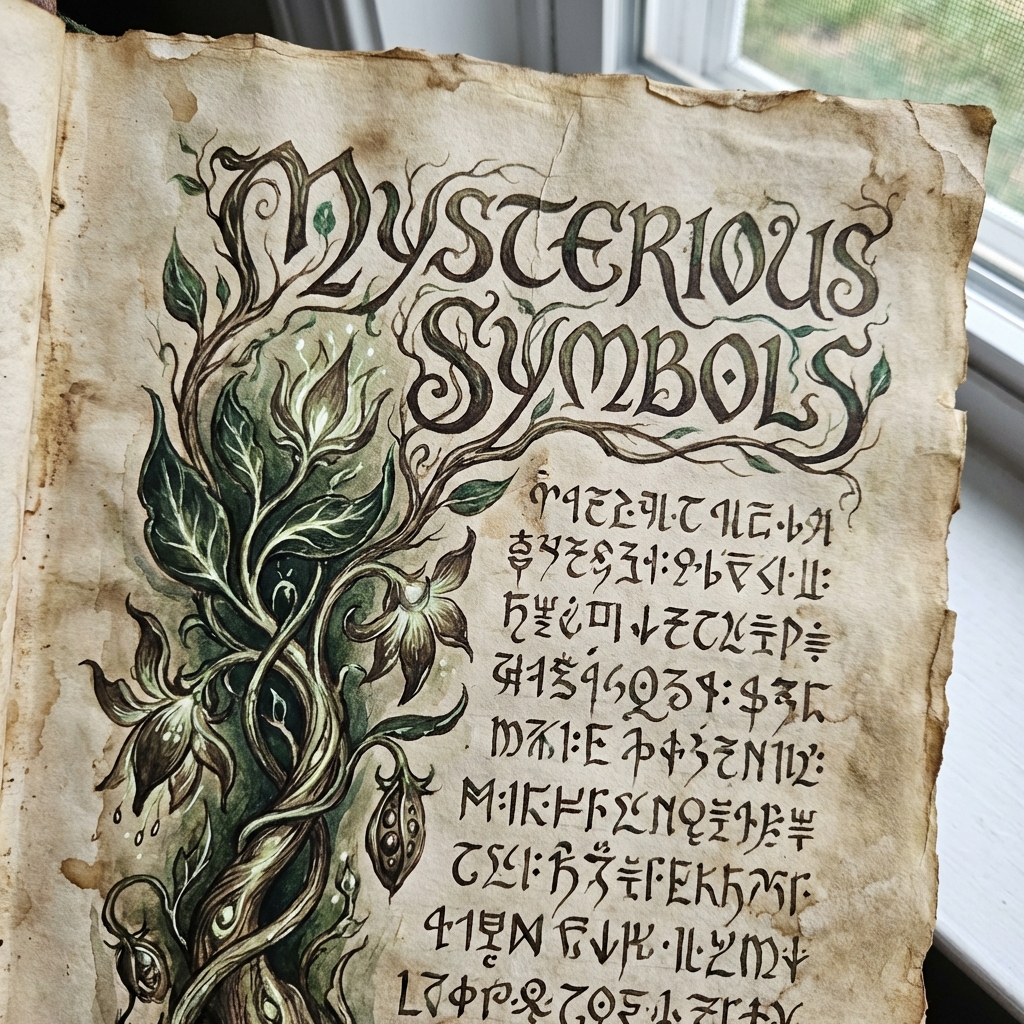
The book contained roughly 240 vellum pages covered in an unknown script, accompanied by illustrations of unidentifiable plants, astronomical diagrams, naked human figures bathing in green pools, and elaborate cosmological charts.
Carbon dating places the vellum's origin between 1404 and 1438, somewhere in Europe—likely Italy, based on stylistic analysis. The text contains approximately 38,000 words written in glyphs that scholars have labeled "Voynichese." The writing system has properties suggesting it is not random: certain characters cluster together in ways that suggest grammar, and word frequencies follow patterns found in natural languages. But it matches no known language or cipher system from the period.
The manuscript's ownership history is fragmentary. At some point it belonged to Holy Roman Emperor Rudolph II, who paid 600 gold ducats for it, believing it to be the work of the medieval philosopher Roger Bacon. The English astrologer John Dee likely sold it to him. After that, it passed through various hands before Voynich found it collecting dust in a villa outside Rome.
Cryptographers have tried everything. World War II codebreakers failed. Computer analysis has produced statistical patterns but no translation. Claimed solutions appear regularly—Hebrew, Latin anagrams, a lost proto-Romance language—but none has gained scholarly acceptance. The symbols do not yield to simple substitution ciphers of the type used in the 15th century.
Recent research has proposed the text might use a complex encryption method involving playing cards and dice to introduce randomness, making decryption nearly impossible without the original key. Whether this is correct remains unproven.
The Voynich Manuscript now resides at Yale University's Beinecke Rare Book & Manuscript Library, where anyone can view high-resolution scans online. It continues to resist explanation.
Filed under Before 1800, Mysteries, EuropeFurther reading: Wikipedia
Print it for the office looPick your next sheet
Judge a story by its emoji. No peeking at titles.