The Great Stink of London
In the summer of 1858, the River Thames smelled so bad that Parliament considered relocating.
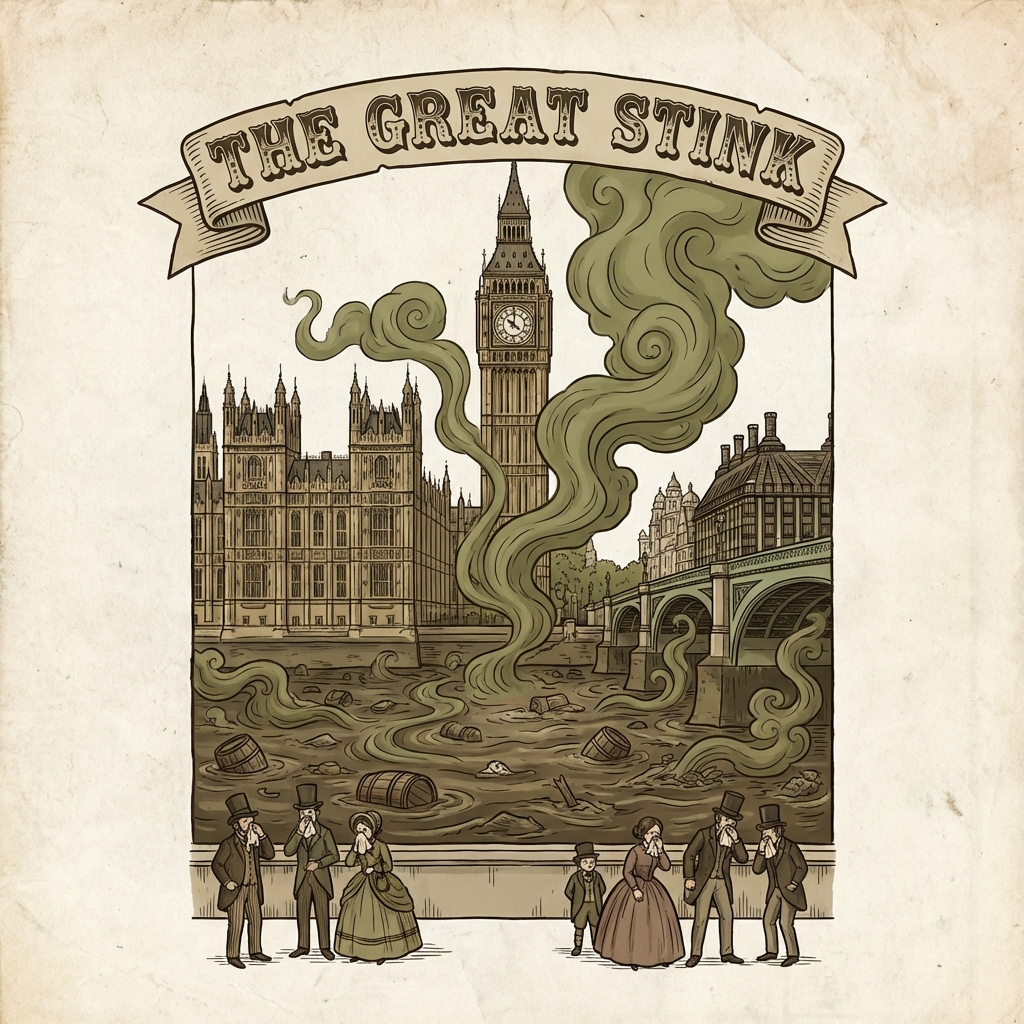
Members of the House of Commons soaked their curtains in chloride of lime just to make sessions bearable. People walking too close to the river reportedly vomited. The newspapers called it the Great Stink.
London had grown into the world's largest city without building an adequate sewage system. By the 1850s, over 2.5 million people were producing waste that drained into an aging network of pipes emptying directly into the Thames. The same river supplied much of the city's drinking water. Cholera outbreaks had killed tens of thousands in the preceding decades, though the connection between contaminated water and disease was only beginning to be understood.
The summer of 1858 was unusually hot, with temperatures reaching 94.5°F. The heat accelerated decomposition along the river's banks, where raw sewage had accumulated for years. The Houses of Parliament, recently rebuilt at enormous expense beside the Thames, sat in the middle of the stench. Benjamin Disraeli, then chancellor, described the river as a "Stygian pool reeking with ineffable and unbearable horror."
Faced with the prospect of their own poisoning, Parliament acted with unusual speed. A bill authorizing £2.5 million—roughly £300 million today—passed in just eighteen days. The project was handed to civil engineer Joseph Bazalgette.
Bazalgette designed an interconnected network of sewers sloping away from central London toward outfalls east of the city. Construction required over 318 million bricks and resulted in more than 1,000 miles of new sewers. The project also created the Victoria, Chelsea, and Albert Embankments along the Thames, which reclaimed land and provided housing for the massive underground pipes.
The new system worked. Cholera outbreaks in London ceased. Bazalgette's sewers remain in operation today, still serving a city that has grown to over nine million people. A supplementary tunnel began construction in 2016—the first major upgrade to the system he built.
Filed under The 1800s, Inventions, QuirkyFurther reading: Wikipedia
Print it for the office looPick your next sheet
Judge a story by its emoji. No peeking at titles.