Tulip Mania
In the winter of 1637, a single tulip bulb sold for 6,000 florins in the Netherlands—enough to buy a luxurious house on an Amsterdam canal. A few weeks later, the same bulb was worth almost nothing. The collapse of the Dutch tulip market is generally considered the first recorded speculative bubble in history.
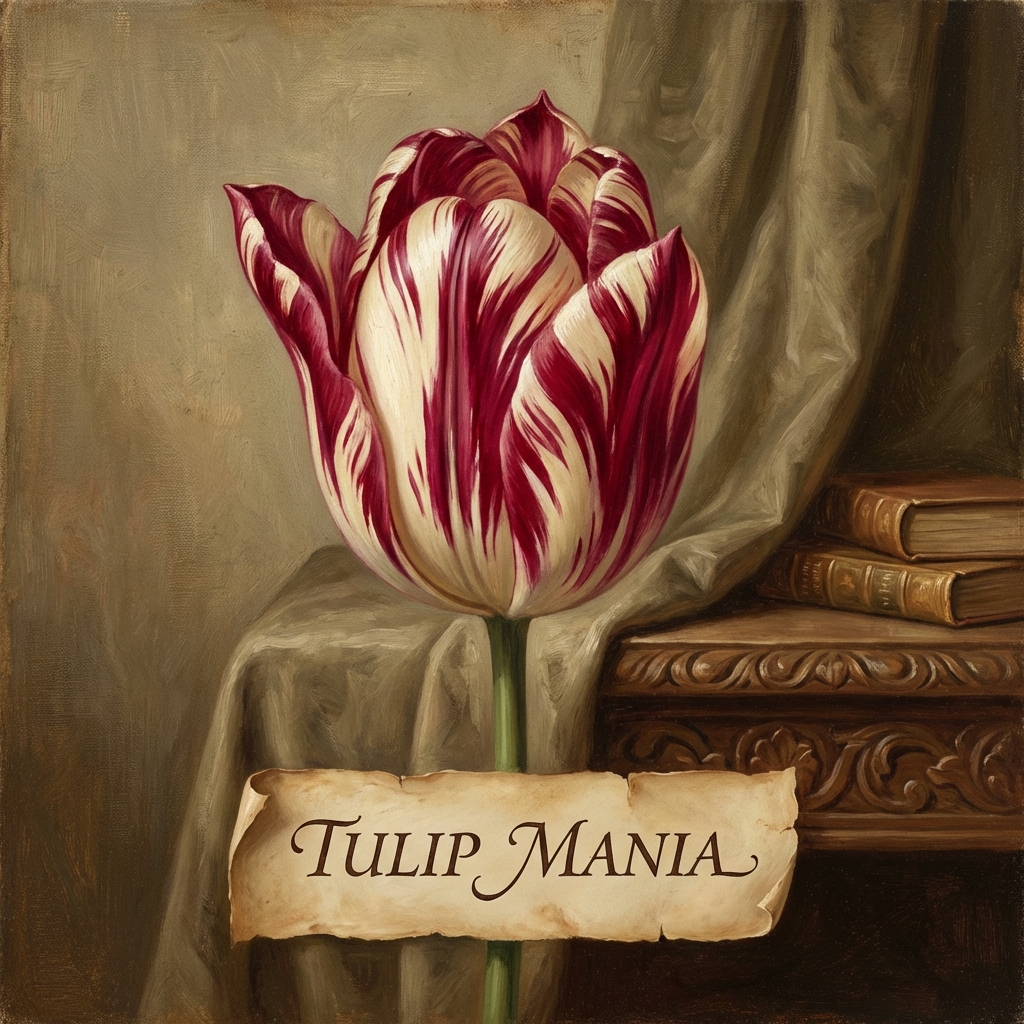
Tulips had arrived in Europe from the Ottoman Empire in the mid-1500s and quickly became fashionable among the Dutch elite. Some bulbs developed striking striped patterns caused by a mosaic virus that infected the plant, creating unpredictable and irreproducible color variations. These "broken" tulips were especially prized, and breeders gave them poetic names like Admirael van der Eijck and Semper Augustus.
By the mid-1630s, speculation had taken hold. Tulip contracts were bought and sold on the expectation that prices would keep rising. People who had no interest in flowers began trading bulbs as investments. In one recorded case, a speculator offered 5 hectares of land for a single Semper Augustus bulb. The mania accelerated through 1636, with prices climbing month after month.
Then, in February 1637, a buyer in Haarlem failed to show up at an auction. The default triggered immediate panic. Within days, traders discovered that no one was willing to pay the inflated prices anymore. Bulbs that had commanded fortunes became worthless almost overnight—some losing 99 percent of their value.
Historians now debate how severe the economic damage actually was. Anne Goldgar, who studied the period extensively, found no evidence that anyone went bankrupt and concluded that the financial repercussions were relatively minor. The Dutch Republic remained one of the world's wealthiest nations throughout the 17th century. But the mania's symbolic impact endured. Every subsequent market craze—from the South Sea Bubble to the dot-com boom—has drawn comparisons to tulip mania, the original example of collective financial delusion.
Filed under Before 1800, Europe, HistoryFurther reading: Wikipedia
Print it for the office looPick your next sheet
Judge a story by its emoji. No peeking at titles.