Why Barns Are Painted Red
The red barns scattered across the American countryside are not painted that color for aesthetic reasons. They are red because rust was cheap.
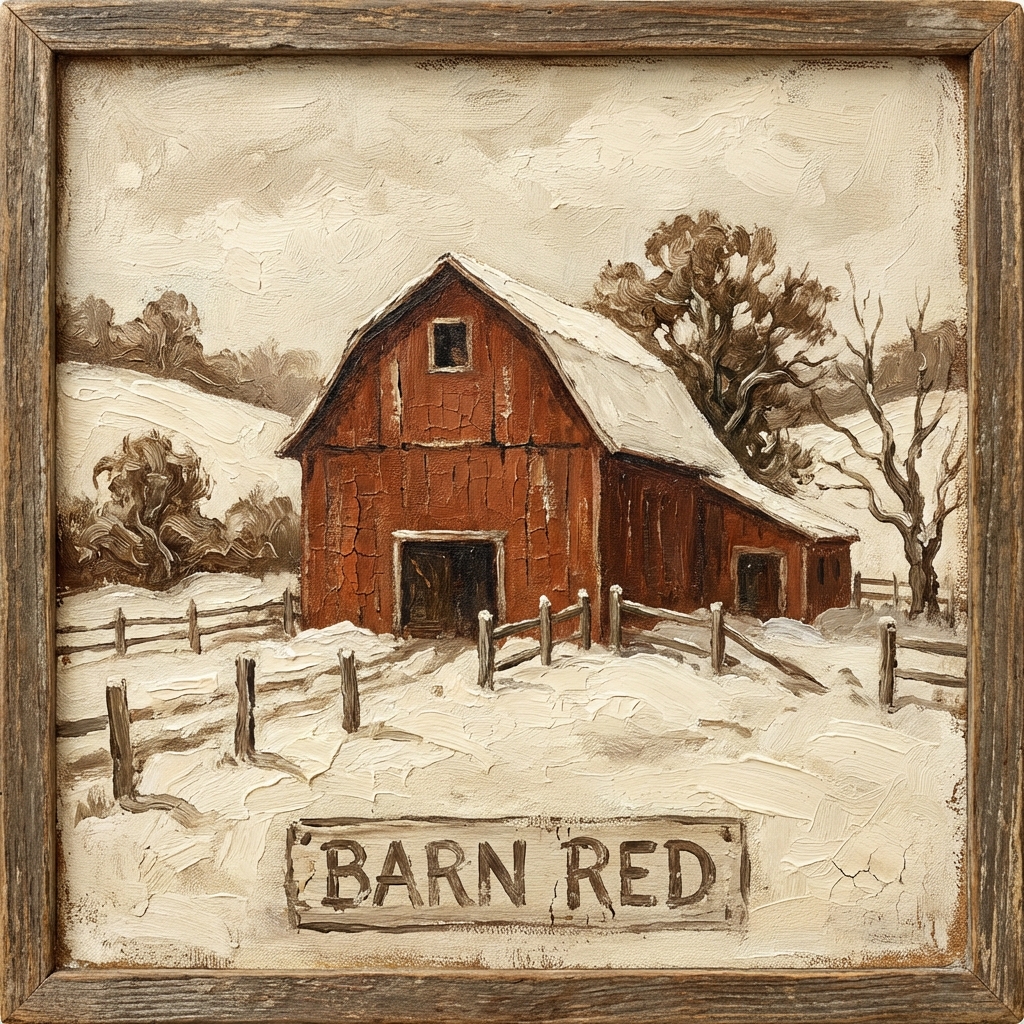
Before the late 1700s, most American barns went unpainted. Wood was left to weather naturally because commercial paint was expensive and farmers had little spare money. Eventually, farmers began mixing their own protective coatings to shield barn wood from the elements. The recipe they developed combined skimmed milk, lime, linseed oil, and ferrous oxide—ordinary rust. The mixture dried into a hard, plastic-like finish that protected wood for years.
Rust was abundant on farms. More importantly, iron oxide was known to kill the molds and mosses that grew on barn siding and accelerated wood decay. By adding it to paint, farmers got both color and antifungal protection. The resulting shade was not the bright fire-engine red often seen today but a darker, burnt-orange hue that became known as "barn red."
The tradition may also have Scandinavian roots. In Sweden, red paint made from copper mine byproducts had been used on buildings for centuries. Scandinavian noblemen in the 16th century used the color to make wooden structures resemble expensive European brick. Swedish immigrants brought this tradition to Minnesota and surrounding states in the mid-1800s, reinforcing the association between barns and red paint.
Economics cemented the practice. By the late 19th century, commercially produced red paint had become the cheapest option available because iron oxide pigments were so plentiful. A 1922 Sears, Roebuck catalog listed red barn paint at $1.43 per gallon while other colors of house paint sold for at least $2.25—nearly twice the price.
Farmers also discovered that dark red paint kept their barns warmer in winter by absorbing more sunlight than bare wood. What began as a practical solution for preserving wood became an enduring visual tradition.
Filed under Culture & Words, America, ScienceFurther reading: Smithsonian Magazine
Print it for the office looPick your next sheet
Judge a story by its emoji. No peeking at titles.