Centralia
The underground fire beneath Centralia, Pennsylvania, has been burning since 1962. Experts estimate there is enough coal in the seams under the town to keep it burning for another 250 years.
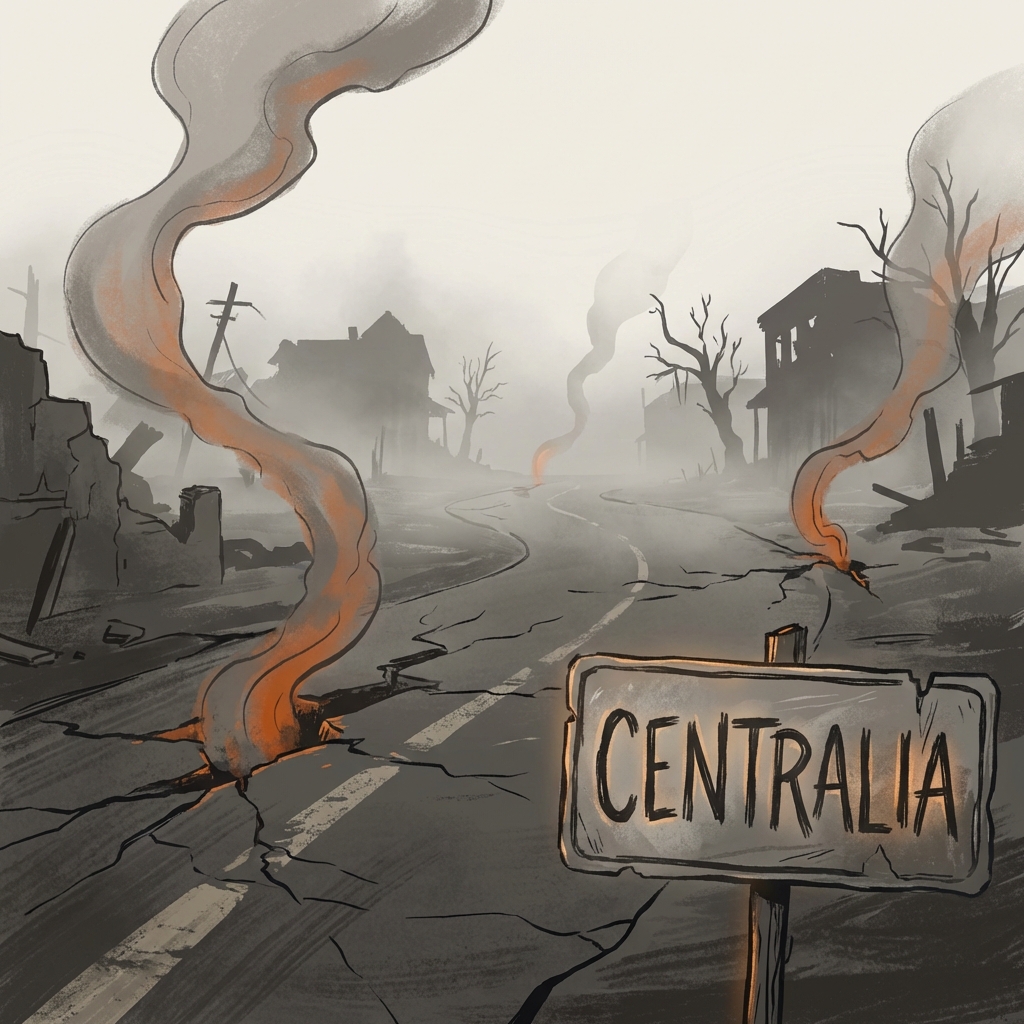
The fire started on May 27, 1962, when the borough council hired members of the local volunteer fire company to clean up the town landfill. The dump sat in an abandoned strip-mine pit near the cemetery. Following previous practice, the workers set the trash on fire and left it to burn out. But this time it didn't. An unsealed opening in the pit allowed flames to reach the labyrinth of abandoned coal mines that honeycomb the rock beneath Centralia. The fire spread into the tunnels and has never stopped.
By the early 1980s, residents were noticing strange effects. Steam vented from cracks in the ground. Backyard gardens grew unusually warm. In 1981, a twelve-year-old boy named Todd Domboski fell into a sinkhole that suddenly opened in his grandmother's yard—a 150-foot-deep pit emitting lethal levels of carbon monoxide. He survived only because he grabbed onto a tree root and was pulled out by his cousin.
The federal government began relocating residents in 1984, allocating more than $42 million for buyouts. By 1992, Pennsylvania's governor had invoked eminent domain on all properties in the borough. The Postal Service discontinued Centralia's ZIP code in 2002. Of the more than 1,000 people who lived there in 1980, only five remained by 2020. Those residents reached an agreement with the state allowing them to stay until they die, after which the rights to their properties revert to the government.
Smoke still seeps from cracks in the hillsides. Sinkholes continue to open without warning. The underground fire burns at depths of around 300 feet across a stretch of nearly 3,700 acres. Centralia is now the least-populated municipality in Pennsylvania, a ghost town built over an inferno that will outlast everyone who remembers when it was still a place where people lived.
Filed under Disasters & Drama, America, The 1900sFurther reading: Wikipedia
Print it for the office looPick your next sheet
Judge a story by its emoji. No peeking at titles.