Whale Falls
When a whale dies in the open ocean, its carcass eventually sinks to the seafloor. In the deep sea, where food is scarce and life clings to survival in near-total darkness, a dead whale becomes an oasis—an ecosystem that can sustain hundreds of species for decades.
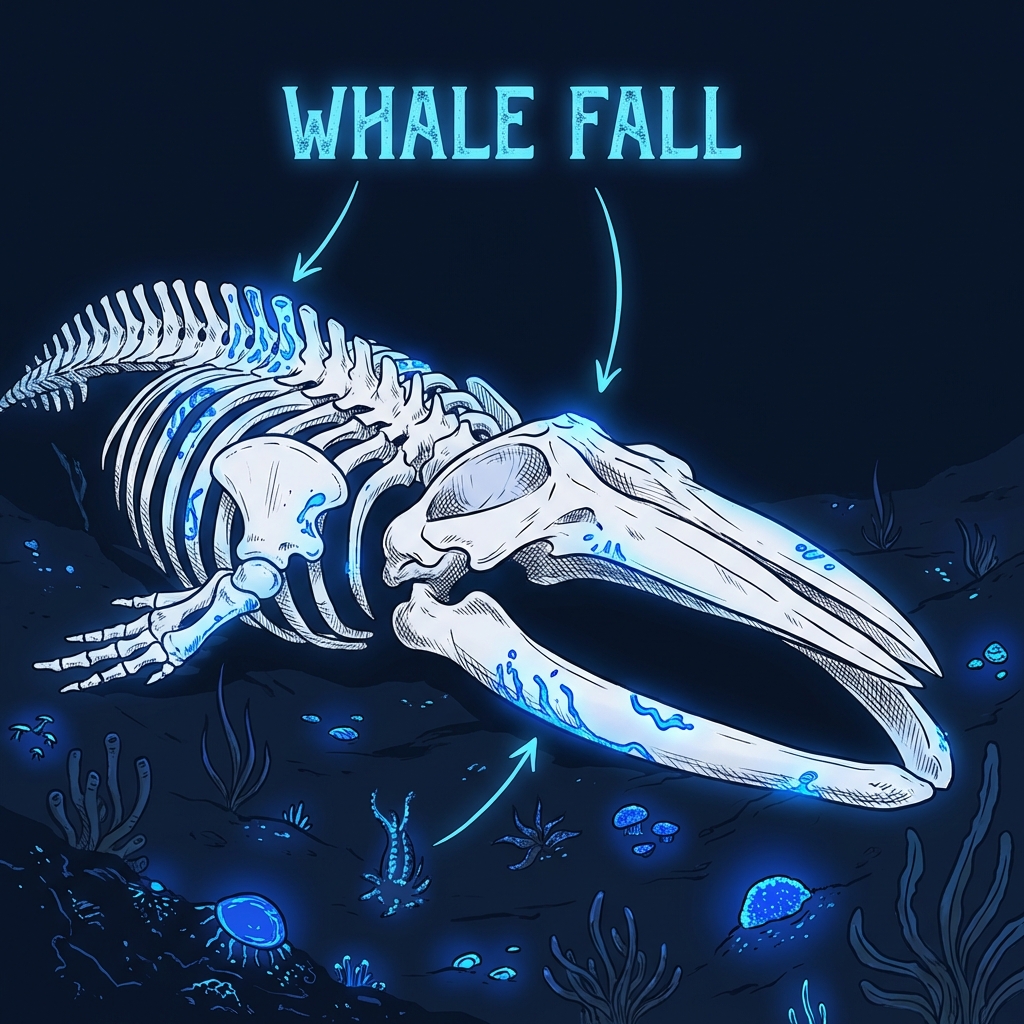
The first stage begins as soon as the carcass settles. Hagfish, sleeper sharks, and other mobile scavengers arrive to consume the soft tissue, sometimes eating 40 to 60 kilograms per day. This phase can last up to a year and a half, depending on the size of the whale.
Once the flesh is stripped, the second stage begins. Smaller organisms colonize the bones and the sediment around them, which has become enriched with organic matter. Polychaete worms, crustaceans, and mollusks move in to exploit what remains. This phase can continue for several more years.
The third stage is the strangest and longest. Bacteria begin breaking down the lipids still embedded in the whale's bones. These are anaerobic bacteria that use sulfate instead of oxygen and excrete hydrogen sulfide as a waste product. The chemical environment they create supports chemosynthetic organisms—creatures that derive energy from inorganic chemicals rather than sunlight. Mussels and clams harboring these bacteria colonize the bones, along with species previously known only from hydrothermal vents.
Among the most distinctive residents are Osedax, the bone-eating worms discovered in 2002. Sometimes called zombie worms, they have no mouths or digestive systems. Instead, they secrete acid to dissolve whale bone and absorb the nutrients through symbiotic bacteria living in their tissues.
A single whale fall can support over 200 species, many found nowhere else. The chemosynthetic phase can last 50 to 100 years before the bones are finally consumed. In 1987, researchers aboard the submersible Alvin discovered the first known whale fall—a blue whale skeleton carpeted with life three kilometers below the surface.
Filed under Animals & Nature, ScienceFurther reading: Wikipedia
Print it for the office looPick your next sheet
Judge a story by its emoji. No peeking at titles.