The Winchester Mystery House
Sarah Winchester inherited a fortune built on rifles. Her husband William had been heir to the Winchester Repeating Arms Company, maker of "the gun that won the West."
When he died of tuberculosis in 1881, she received roughly $20 million and half the company's profits—about $1,000 a day for the rest of her life. She was 42 years old, had already lost an infant daughter, and now found herself alone with more money than she could reasonably spend.
In 1886, she moved to California for her health and bought an eight-room farmhouse in San Jose. Then she started building. For the next 36 years, until her death in 1922, construction never stopped. Workers labored in shifts, hammers falling day and night. She designed every addition herself, without an architect, sketching plans on napkins and scraps of paper.
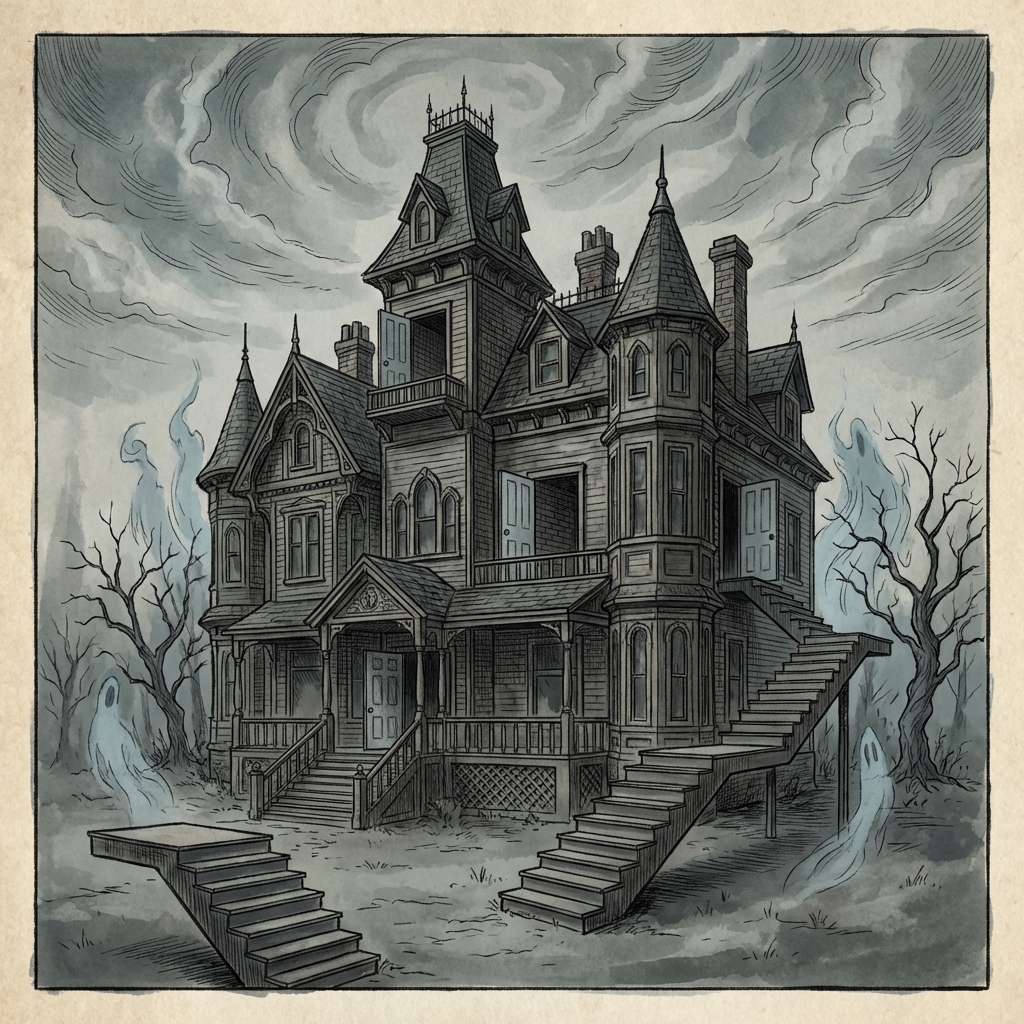
The house grew into something strange. Staircases that climb to ceilings and stop. Doors that open onto walls or two-story drops into the garden. Windows built into floors. Hallways that loop back on themselves. By some counts, the finished mansion contained 160 rooms, 47 fireplaces, 10,000 windows, and 6 kitchens. Before the 1906 earthquake knocked off its top floors, it stood seven stories tall.
The popular story is that a medium told Sarah the spirits of everyone killed by Winchester rifles were haunting her, and that she built the maze to confuse them. It makes for good marketing—the house has been a tourist attraction since 1923—but people who actually knew her described a sharp, practical woman with a talent for financial management. She wasn't confused. She was building.
Some of her innovations were ahead of their time. Wool insulation. A floating foundation that helped the house survive the earthquake. Indoor plumbing with a working shower. A conservatory designed so all the plants could be watered at once, with drainage running down to the kitchen for reuse. She installed pillars upside down because she believed they'd bear weight better that way.
Maybe she was eccentric. Maybe she just had money, time, and opinions about architecture. The construction stopped the day she died, and the house has stood as she left it ever since.
Filed under Mysteries, The 1800s, InventionsFurther reading: Wikipedia
Print it for the office looPick your next sheet
Judge a story by its emoji. No peeking at titles.