Giethoorn
In the Dutch province of Overijssel, about ninety minutes from Amsterdam, there's a village where you can't drive a car. Not because it's forbidden—there simply aren't any roads to drive on. Giethoorn has canals instead, roughly four miles of them, crossed by 180 small wooden bridges and navigated by boat.
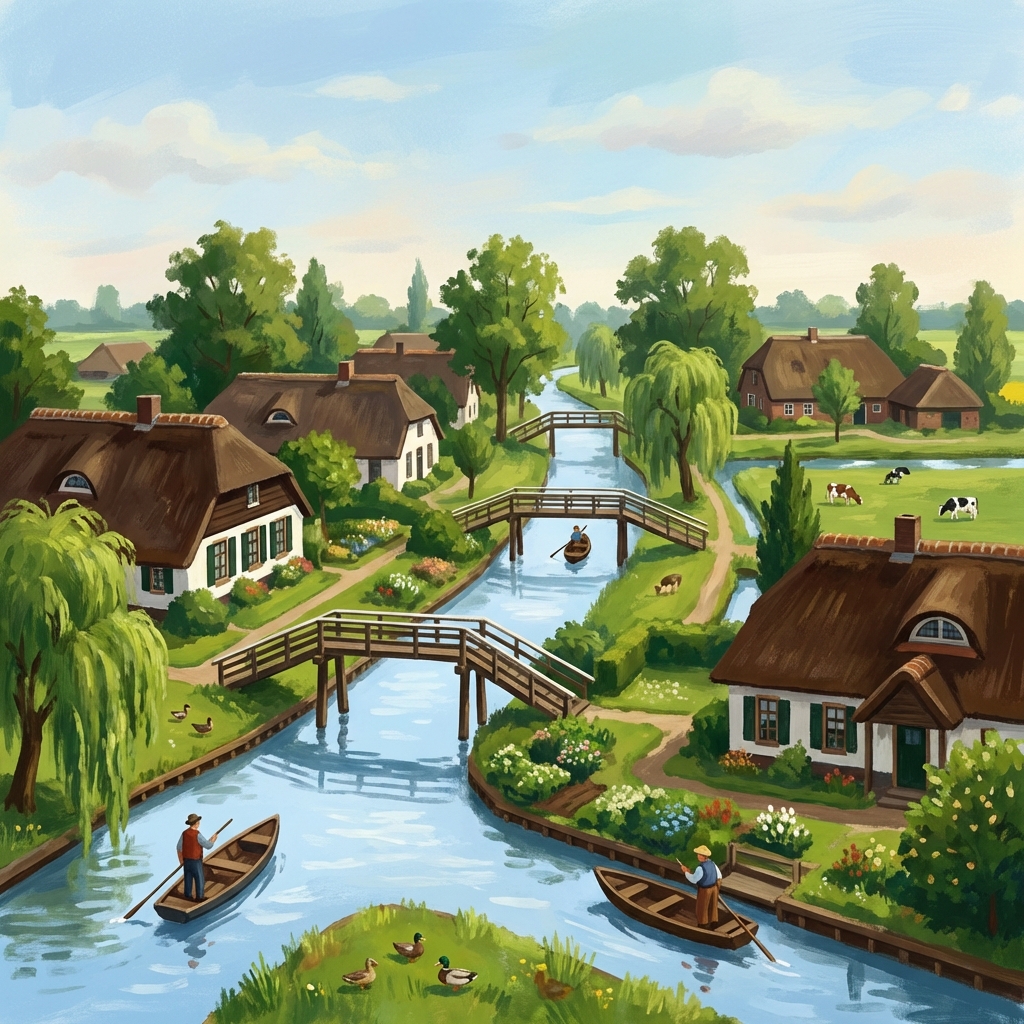
The village exists because of peat. Eight hundred years ago, settlers arrived to dig the rich, dark fuel from the marshy ground. As they extracted it, they left holes behind. The holes filled with water and connected to each other, and the diggers started using these channels to transport their hauls. Over time, what began as accidental excavation became a transportation network. The canals weren't designed; they were a byproduct of industry.
The village's name comes from an older story. According to local tradition, the original settlers discovered a collection of goat horns in the marsh—remains of animals thought to have drowned in a catastrophic flood in 1170. They called the place Geytenhorn, horn of goats, which eventually softened into Giethoorn.
When automobiles arrived in the Netherlands, the old part of the village posed a problem. The lanes were too narrow, the ground too soft, the bridges too small. Rather than tear it apart to accommodate cars, the residents voted to leave things as they were. A cycling path was added eventually, but the historic center remains roadless. About 2,800 people live there now, getting around by bicycle, by foot, or by the flat-bottomed punter boats that have plied these waters since at least the sixteenth century.
These days, most of the boats run on electricity—"whisper boats," they're called, because they're nearly silent. No engine noise, no exhaust. The village absorbs over a million tourists a year, drawn by photographs of thatched-roof farmhouses reflected in still water. The locals call it the Venice of the Netherlands, though Venice was built on purpose. Giethoorn happened by accident, shaped by people pulling fuel from the ground and finding, when they were done, that they'd dug themselves a way to live.
Filed under Culture & Words, Quirky, EuropeFurther reading: Wikipedia
Print it for the office looPick your next sheet
Judge a story by its emoji. No peeking at titles.