The Svalbard Global Seed Vault
On a remote island in the Norwegian Arctic, about 620 miles from the North Pole, there's a concrete entrance jutting out of a mountainside. Behind it, tunneling 430 feet into the frozen rock, is a vault containing nearly one million seed samples from crops around the world.
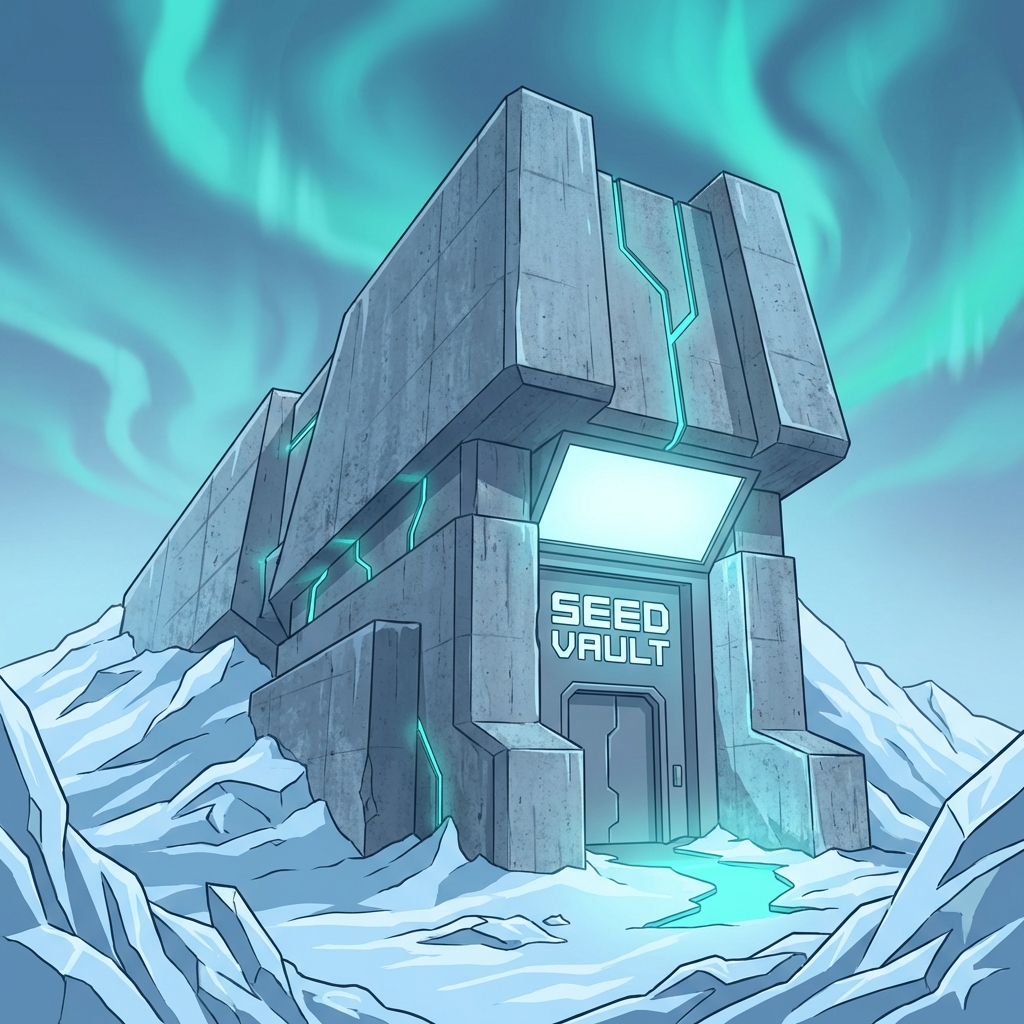
It's designed to survive anything—war, asteroid strikes, the collapse of civilization.
The vault opened in 2008, but the idea began with Cary Fowler, a scientist who'd spent his career worrying about genetic diversity. There are over 1,700 seed banks scattered across the globe, each one preserving samples of local crops. But seed banks are vulnerable. They get destroyed by wars, flooded by hurricanes, defunded by governments. In 2003, Iraq's national seed bank was looted during the invasion. Fowler wanted a backup for the backups.
He chose Spitsbergen, the largest island in the Svalbard archipelago, for practical reasons. No tectonic activity. Permafrost that would help keep seeds cold even if the refrigeration failed. The entrance sits 430 feet above sea level, high enough to stay dry even if every ice cap melted. Norway funded the $9 million construction cost and manages the facility, but any country can deposit seeds for free. The seeds themselves remain the property of whoever sends them.
The vault can hold 4.5 million seed varieties, each variety containing around 500 individual seeds—a theoretical maximum of 2.5 billion seeds. When it opened, it held 320,000 samples. The collection has tripled since then, including ancient strains of wheat, rice, barley, and sorghum that modern agriculture has largely forgotten.
In 2015, the vault proved its purpose. The Syrian civil war destroyed the seed bank at the International Center for Agricultural Research in Dry Areas, which had been headquartered in Aleppo. The center requested its deposits back from Svalbard to rebuild collections in Morocco and Lebanon—the first withdrawal in the vault's history.
Two years later, unusually warm Arctic temperatures melted enough permafrost to flood the entrance tunnel. The seeds themselves weren't damaged, but the incident prompted a $13 million upgrade. Even backup plans need backup plans.
Filed under Modern Times, Inventions, ScienceFurther reading: Wikipedia
Print it for the office looPick your next sheet
Judge a story by its emoji. No peeking at titles.