The Zone of Silence
In the Chihuahuan Desert of northern Mexico, where the states of Durango, Chihuahua, and Coahuila meet, there's a patch of scrubland about thirty miles across that locals call La Zona del Silencio—the Zone of Silence.
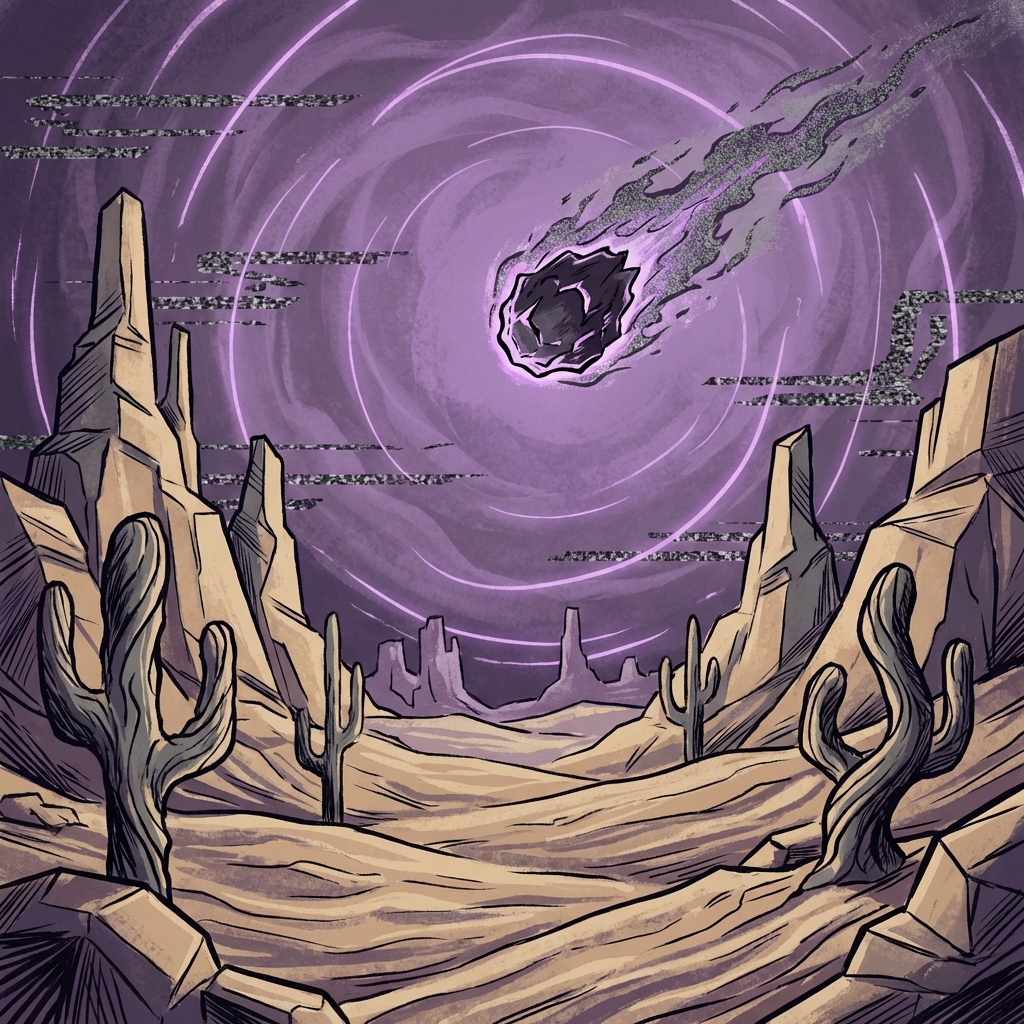
According to legend, radio signals fail there. Compasses spin. Meteorites fall with unusual frequency. Some visitors claim to have seen UFOs.
The name dates to 1966, when a team from Pemex, the Mexican oil company, was surveying the area and their radios kept cutting out. The expedition leader, frustrated, christened the place the Zone of Silence. The name stuck.
Four years later, the legend grew. On July 11, 1970, the U.S. Air Force launched an Athena rocket from Utah carrying a capsule of radioactive Cobalt-57. The rocket was supposed to land in White Sands, New Mexico. Instead, something went wrong—a guidance malfunction—and the rocket overshot its target by more than 500 miles, crashing in the heart of the Zone. The U.S. military spent weeks in the Mexican desert recovering the debris and the radioactive payload, bulldozing a road into the remote area to haul it out. Shortly afterward, Mexico established the Mapimí Biosphere Reserve nearby, which only fueled rumors that something strange had drawn the rocket off course.
The explanations vary. Local guides point to underground deposits of magnetite and uranium that might interfere with electromagnetic signals. The area was once a seabed in the ancient Tethys Ocean, and the geology is unusual—rich in iron ore, scattered with meteorite fragments. Scientists who work at the biosphere reserve, however, say they've never had trouble with their radios. The communication blackouts, they suggest, may have more to do with the remoteness and the terrain than anything supernatural.
The Zone of Silence has become a minor tourist attraction, complete with guided tours and gift shops. Whether it's genuinely anomalous or just a story that grew from a Pemex engineer's bad reception and an errant rocket, the name has proven durable. In the desert, sometimes the legend is the destination.
Filed under Mysteries, Around the World, The 1900sFurther reading: Wikipedia
Print it for the office looPick your next sheet
Judge a story by its emoji. No peeking at titles.