The Library of Unwritten Books
In Richard Brautigan's 1971 novel *The Abortion*, there's a library in San Francisco that accepts any book anyone wants to deposit. Not published books—manuscripts.
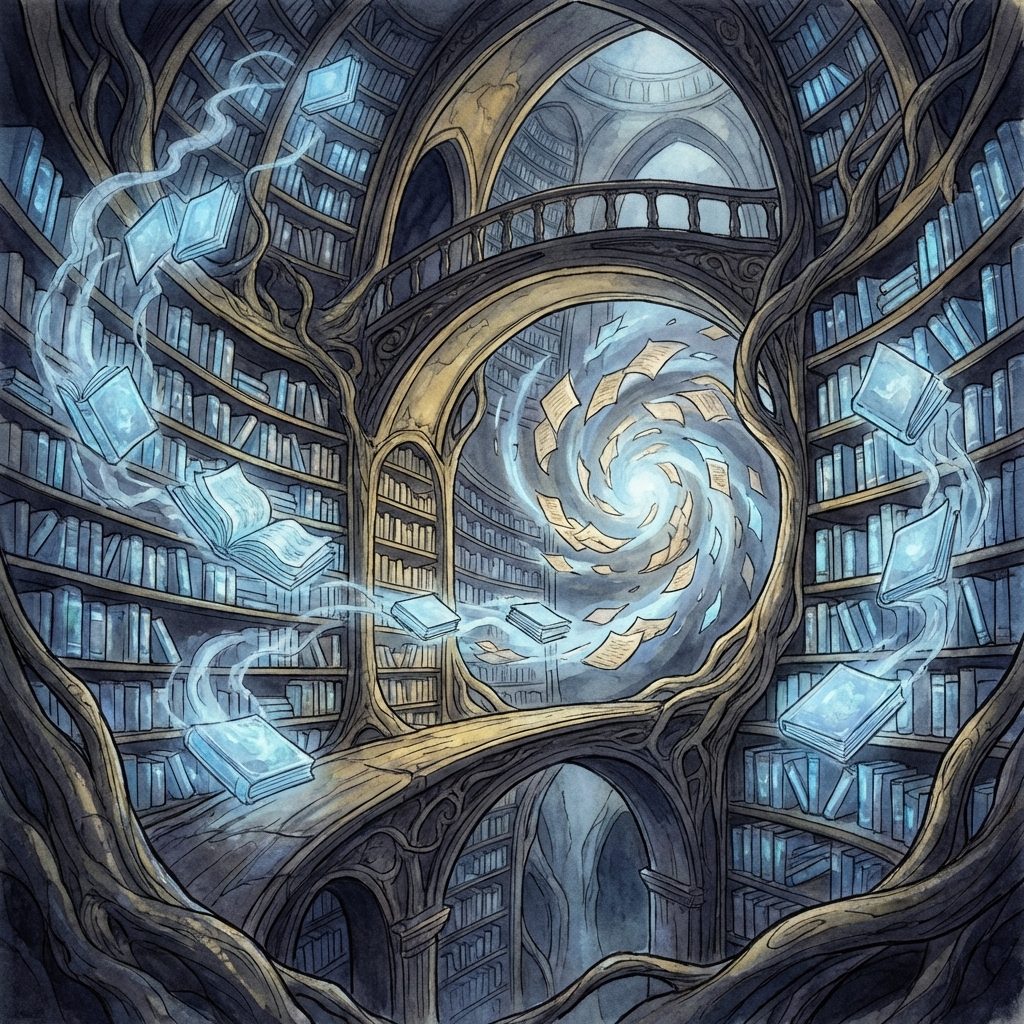
The narrator works as its caretaker, cataloguing whatever people bring: diaries, memoirs, handwritten novels, collections of thoughts that never found a publisher. The library exists for books that have no other place to go.
Two British artists, Caroline Jupp and Sam Brown, decided to take the idea further. In the early 2000s, they started approaching strangers—on streets, in parks, at festivals, in actual libraries—and asking a simple question: if you were going to write a book, what would it be about? They recorded the conversations, transcribed them, and turned each one into a small pamphlet. The dialogue itself became the book. Not the book that might have been written, but a record of the moment someone imagined writing it.
Over the years, Jupp and Brown accumulated over 800 of these pamphlets. They talked to homeless people, housebound elderly, children who had been excluded from school, patients in hospital wards. Everyone had a book in them, or at least the idea of one—a memoir about growing up in a particular neighborhood, a thriller based on something that happened to a friend, a children's story about a talking animal. Some ideas were elaborate; others were fragments. All of them were archived.
The pamphlets were displayed at exhibitions and distributed through book boxes placed in community centers, doctor's waiting rooms, cafés, and laundromats. The project was commissioned by the British Council, the Tate, the V&A, the Baltic Centre for Contemporary Art, and dozens of smaller venues. Each pamphlet represented a conversation that might otherwise have been forgotten, a book that would never exist except as someone describing what it could have been.
The Library of Unwritten Books is now in its final stage. The complete archive is being prepared for deposit at the Mass Observation Archive at the University of Sussex—a permanent home for books that were never written, only imagined out loud.
Filed under Modern Times, Culture & Words, QuirkyFurther reading: Wikipedia
Print it for the office looPick your next sheet
Judge a story by its emoji. No peeking at titles.