The Great Maple Syrup Heist
Quebec produces about 77 percent of the world's maple syrup, and the industry is tightly controlled by the Federation of Quebec Maple Syrup Producers.
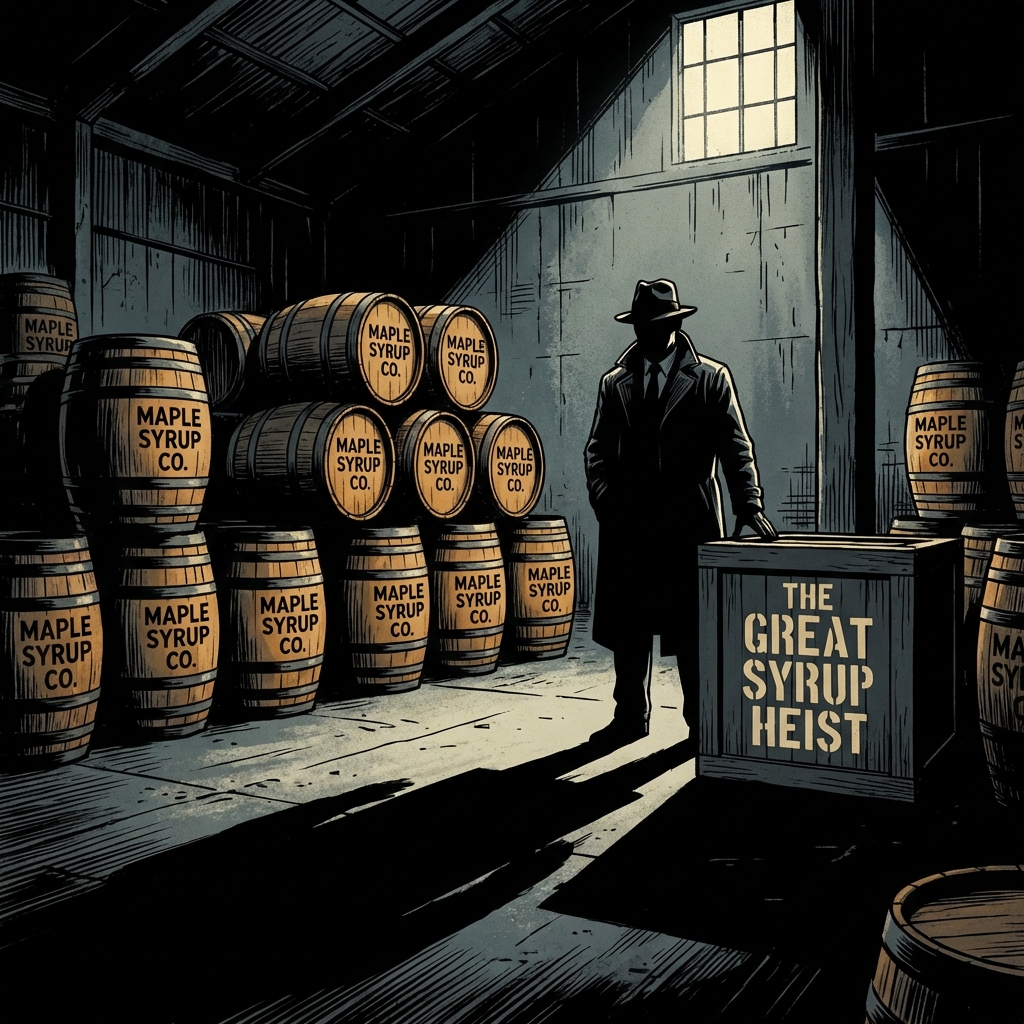
The federation maintains a strategic reserve—millions of pounds of syrup stored in barrels, held back to stabilize prices during lean years and meet demand during good ones. It's essentially OPEC for pancakes.
In July 2012, an inspector named Michel Gavreau climbed a stack of 600-pound barrels in a warehouse near Laurierville, Quebec, and nearly fell. The barrel at the top felt wrong—too light, unbalanced. He looked inside and found it empty. Further inspection revealed that other barrels, which appeared full, had been drained and refilled with water.
By the time authorities tallied the losses, nearly 3,000 tonnes of maple syrup had vanished—about C$18.7 million worth, making it the most valuable theft in Canadian history when adjusted for inflation.
The scheme had unfolded over months. Following a particularly productive season in 2011, the federation had rented overflow space in a warehouse with minimal security. No cameras, no alarms. A ring of thieves exploited the gap. They hauled barrels to a remote sugar shack, siphoned the syrup into their own containers, refilled the original barrels with water, and returned them to storage. As the operation expanded, they grew bolder, taking entire barrels and not bothering to replace them.
The investigation led to 26 arrests. The ringleader, Richard Vallières, received eight years in prison and a $9.4 million fine, with the sentence extended to fourteen years if he couldn't pay. An insider whose spouse owned the warehouse got five years. A New Brunswick syrup reseller who laundered the stolen product—rebranding it as if it had come from his own province—received two years.
The federation has since improved its security. The crime became a Netflix documentary and was fictionalized in an Amazon Prime series called *The Sticky*. It remains one of the stranger entries in the history of organized crime: a heist measured not in cash or jewels but in something uniquely Canadian.
Filed under Food, Around the World, Modern TimesFurther reading: Wikipedia
Print it for the office looPick your next sheet
Judge a story by its emoji. No peeking at titles.