How Champagne Was Invented by Accident
The legend goes like this: Dom Pérignon, a Benedictine monk working in the cellars of the Abbey of Hautvillers in the late 1600s, accidentally bottled wine before fermentation had finished.
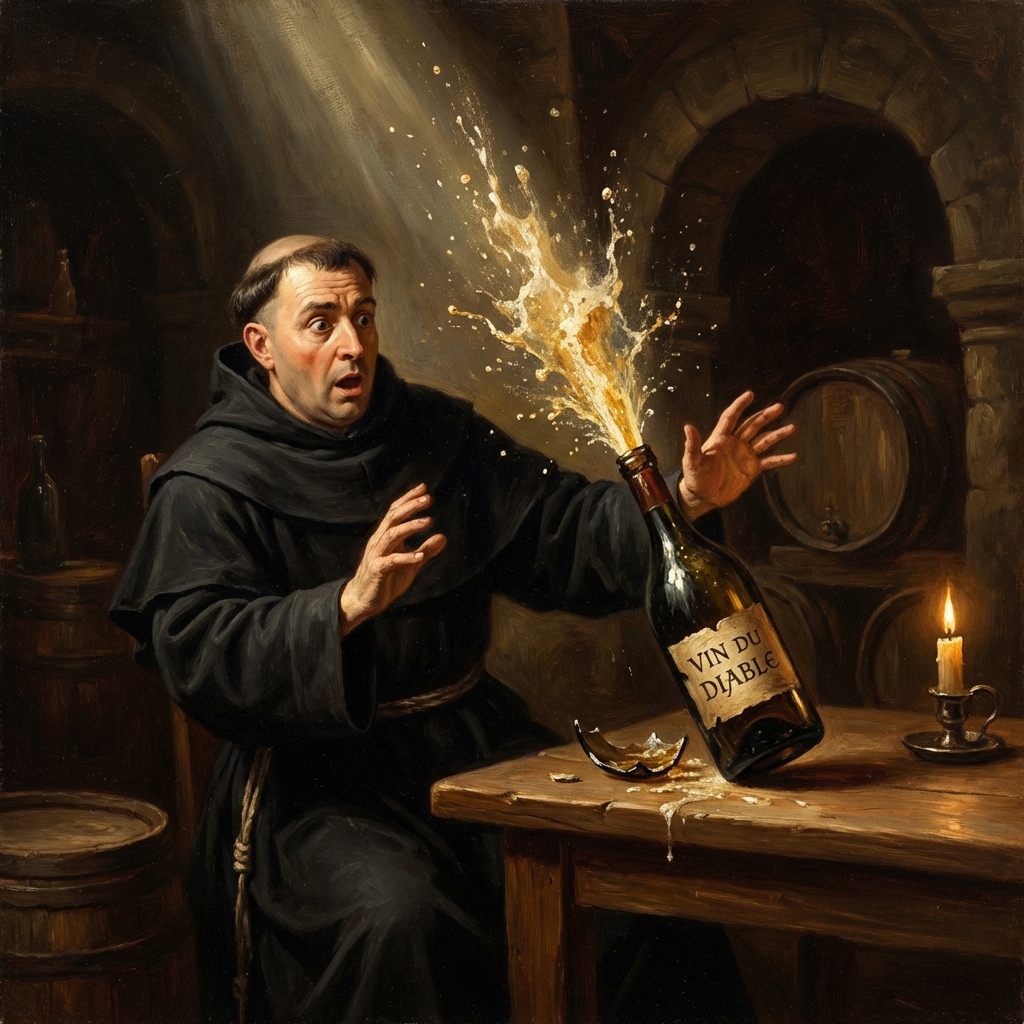
The yeasts kept working inside the sealed bottle, producing carbon dioxide that had nowhere to go. When he opened it and tasted the result, he supposedly called out to his fellow monks, "Come quickly, I am drinking the stars!"
It's a beautiful story. It's also largely false.
Dom Pérignon was a real person—he served as cellar master at Hautvillers from 1668 until his death in 1715—but his job was to eliminate bubbles, not create them. Sparkling wine in that era was considered a flaw, not a feature. The French called it *vin du diable*, the devil's wine, because the pressure from the trapped gas would cause corks to pop unexpectedly or bottles to explode. Winemakers lost significant portions of their inventory to these violent accidents. Dom Pérignon spent his career trying to make still wines that wouldn't referment after bottling.
The bubbles happened anyway. The Champagne region's cold winters would halt fermentation before it was complete. When the wine was bottled and temperatures rose in spring, the dormant yeasts would wake up and start producing carbon dioxide inside the sealed bottle. It was a problem, not a product.
The deliberate creation of sparkling wine was first documented not in France but in England. In 1662, a scientist named Christopher Merret presented a paper to the Royal Society describing the addition of sugar to finished wine to induce a second fermentation. The English had access to stronger coal-fired glass bottles that could withstand the pressure, giving them a practical advantage over French producers.
Dom Pérignon did contribute to champagne's development—he pioneered the use of pinot noir grapes, improved blending techniques, and reinforced corks with hemp to reduce explosions—but he didn't invent the sparkle. That was an accident that took generations to become intentional, and nobody was drinking stars when it started.
Filed under Food, Before 1800, QuirkyFurther reading: Wikipedia
Print it for the office looPick your next sheet
Judge a story by its emoji. No peeking at titles.