Why Cats Purr
The assumption is that a purring cat is a happy cat. And that's often true—cats purr when they're content, when they're being petted, when they're curled up somewhere warm. But cats also purr when they're frightened, when they're in pain, and when they're dying.
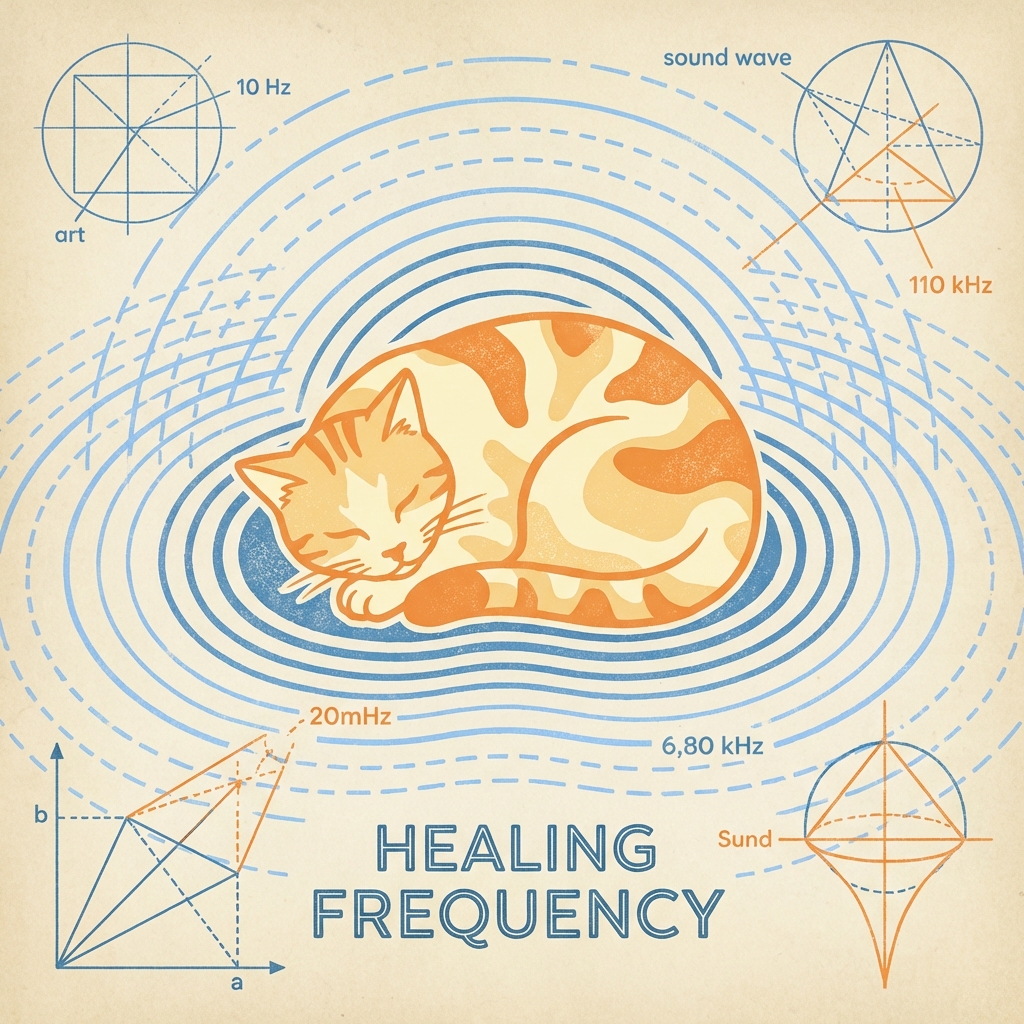
Veterinarians report hearing cats purr on the examination table with broken bones or severe injuries. This suggests the sound is doing something more than expressing satisfaction.
The mechanism itself is understood. Cats purr by rapidly contracting and relaxing the muscles in their larynx, which causes the glottis to open and close repeatedly as they breathe. This happens on both the inhale and exhale, producing a continuous rumble at frequencies typically between 25 and 150 hertz. The vibration is strong enough that you can feel it through a cat's body.
What's interesting is what those frequencies can do. Research has shown that low-frequency vibrations in the 25 to 50 hertz range can stimulate bone growth and increase bone density. Other studies have found that similar frequencies promote the healing of soft tissue and reduce inflammation. Cats, unlike dogs, are built for long periods of inactivity—they sleep twelve to sixteen hours a day—and some researchers have proposed that purring evolved as a low-energy way to keep bones and muscles healthy during all that rest.
The evidence is circumstantial but suggestive. Broken cat bones heal significantly faster than broken dog bones, on average. And while correlation isn't causation, it's notable that the purr falls precisely within the frequency range that promotes healing. It may be less about communication and more about internal maintenance—a kind of biological vibration therapy that the cat runs automatically.
There's also some evidence that humans benefit from proximity to purring cats. Cat owners have lower rates of heart disease, possibly because the sound and vibration help reduce blood pressure and stress hormones. Whether the cats are doing this for us or just letting us share in the side effects of their own self-repair system is an open question.
Filed under Modern Times, Animals & Nature, ScienceFurther reading: Scientific American
Print it for the office looPick your next sheet
Judge a story by its emoji. No peeking at titles.