The Collyer Brothers
In March 1947, the New York City Police Department received an anonymous tip that someone had died inside a decaying brownstone at 2078 Fifth Avenue in Harlem.
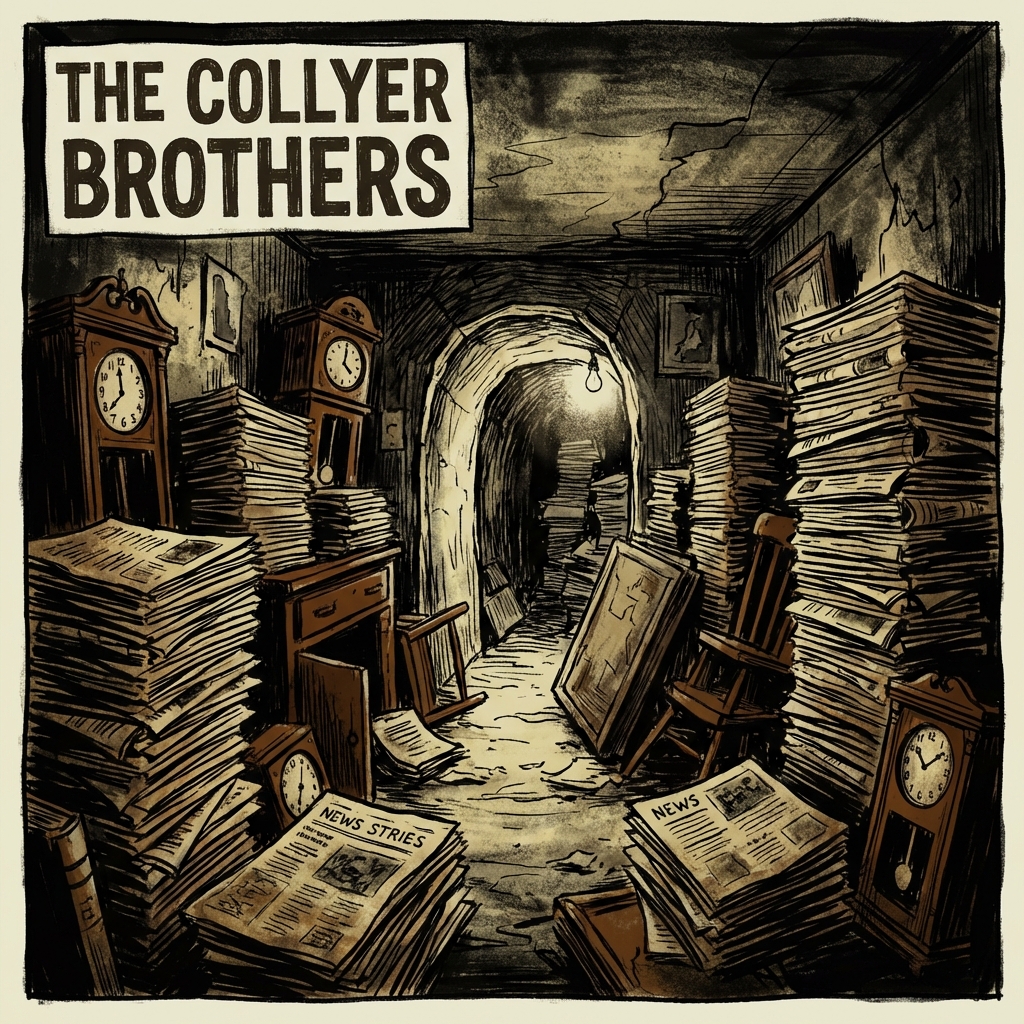
Officers arrived to find the building sealed. The front door wouldn't open. The basement entrance was blocked by a solid wall of debris. They tried the windows, the roof, any gap they could find. Everything was barricaded from inside.
Eventually they broke through a second-floor window and found themselves in a maze. Stacks of newspapers reached the ceiling. Pianos. Folding chairs. Parts of a horse-drawn carriage. A Model T Ford, disassembled. Half a sewing machine. Thousands of books. The accumulation was so dense that police had to tunnel through it, and they kept triggering booby traps—trip wires connected to piles of junk that would collapse on anyone who disturbed them.
Homer Collyer was found dead on March 21, seated in a bathrobe, surrounded by the hoard. He had been blind, paralyzed, and dependent on his brother Langley to bring him food. The police searched for Langley but couldn't find him. They assumed he had fled.
Eighteen days later, on April 8, workers removing debris discovered Langley's body ten feet from where Homer had died. He was wedged in a narrow tunnel, crushed beneath a pile of newspapers and a chest of drawers. He had tripped one of his own booby traps while crawling through to feed his brother. Without food, Homer had starved to death in the days that followed.
The brothers had both attended Columbia University. Homer became a lawyer, Langley an engineer. They came from a respectable family and had lived in the brownstone since childhood. At some point they stopped throwing things away and started fortifying the house against intruders. The collection eventually weighed 140 tons.
The building was demolished later that year—it was beyond repair—and the lot became a small public park. Decades later, New York firefighters still refer to apartments crammed with junk as "Collyers."
Filed under America, Science, QuirkyFurther reading: Wikipedia
Print it for the office looPick your next sheet
Judge a story by its emoji. No peeking at titles.