The Lake That Turns Animals to Stone
In northern Tanzania, near the Kenyan border, there's a shallow salt lake that preserves dead animals like fossils.
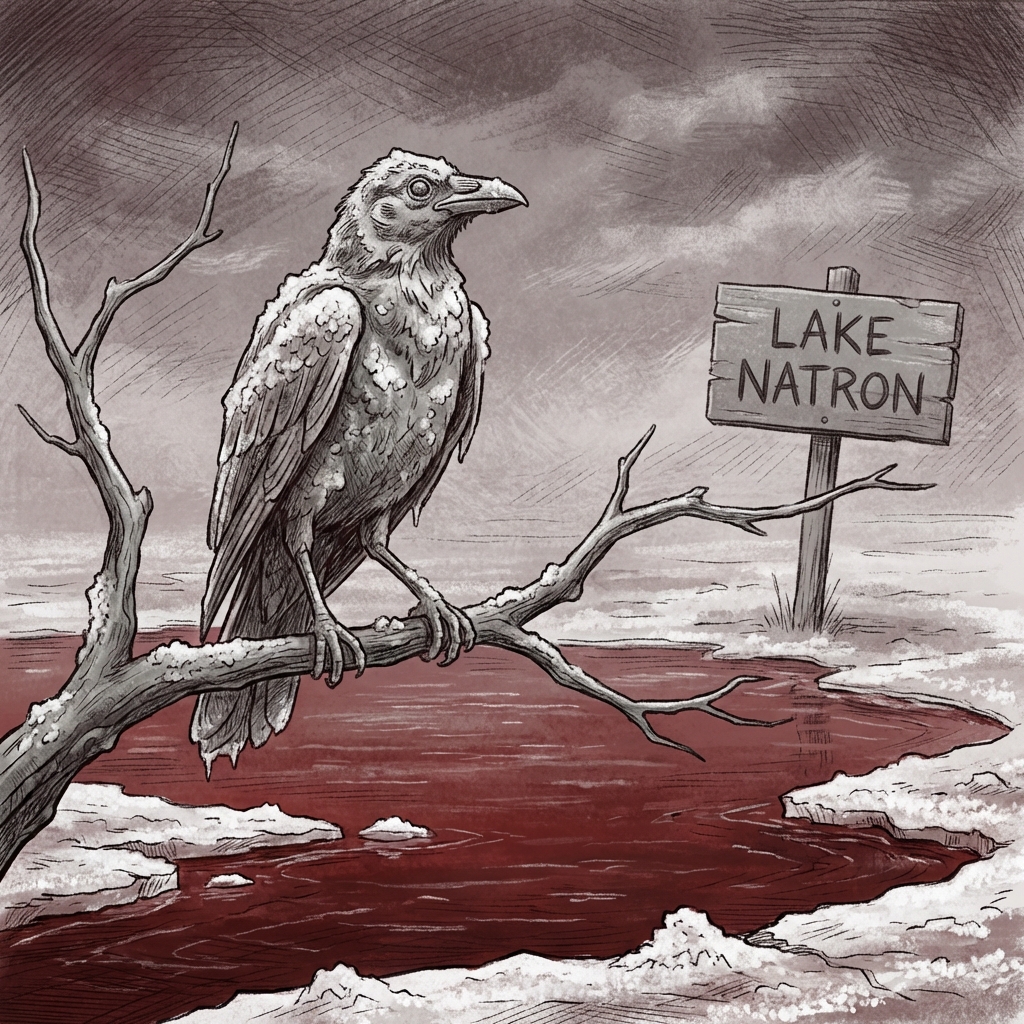
Lake Natron sits in a basin with no outlet—water flows in from hot springs and small rivers but can only escape through evaporation. Over time, this has concentrated the minerals to extreme levels. The water's pH can reach 10.5, nearly as alkaline as ammonia. Temperatures at the surface climb as high as 140 degrees Fahrenheit.
The lake gets its name from natron, a naturally occurring mix of sodium carbonate and baking soda that was once used by ancient Egyptians in mummification. When animals die in or near the water, the sodium and salt calcify their bodies, preserving them in eerie detail—feathers intact, beaks slightly open, frozen in positions that look almost posed.
In 2011, photographer Nick Brandt was working on a book about the disappearing wildlife of East Africa when he found calcified birds and bats along the shoreline. The water's chemical density makes it highly reflective, and Brandt suspects that migrating birds, fooled by the mirror-like surface, crash into the lake thinking they're flying through empty air. Once dead, the alkaline water hardens them into statues.
Brandt collected the carcasses and arranged them in lifelike positions—a bat with wings spread, a songbird perched on a branch—then photographed them against the stark landscape. The images, published under the title *The Calcified*, look like taxidermy but aren't. "The bodies themselves are exactly the way the birds were found," Brandt said. "All I did was position them."
Despite its reputation, Lake Natron isn't a lifeless wasteland. The harsh chemistry that kills some animals supports others. It's a critical breeding ground for the lesser flamingo, which has evolved to tolerate the alkaline conditions. Flamingos feed on the algae that thrives in the soda-rich shallows, and the lake's hostility to predators makes it a relatively safe place to nest. What looks like death to some species is, for others, home.
Filed under Around the World, Modern Times, Disasters & DramaFurther reading: Wikipedia
Print it for the office looPick your next sheet
Judge a story by its emoji. No peeking at titles.