Ketchup Was Once Sold as Medicine
Before ketchup became a condiment, it was a patent medicine.
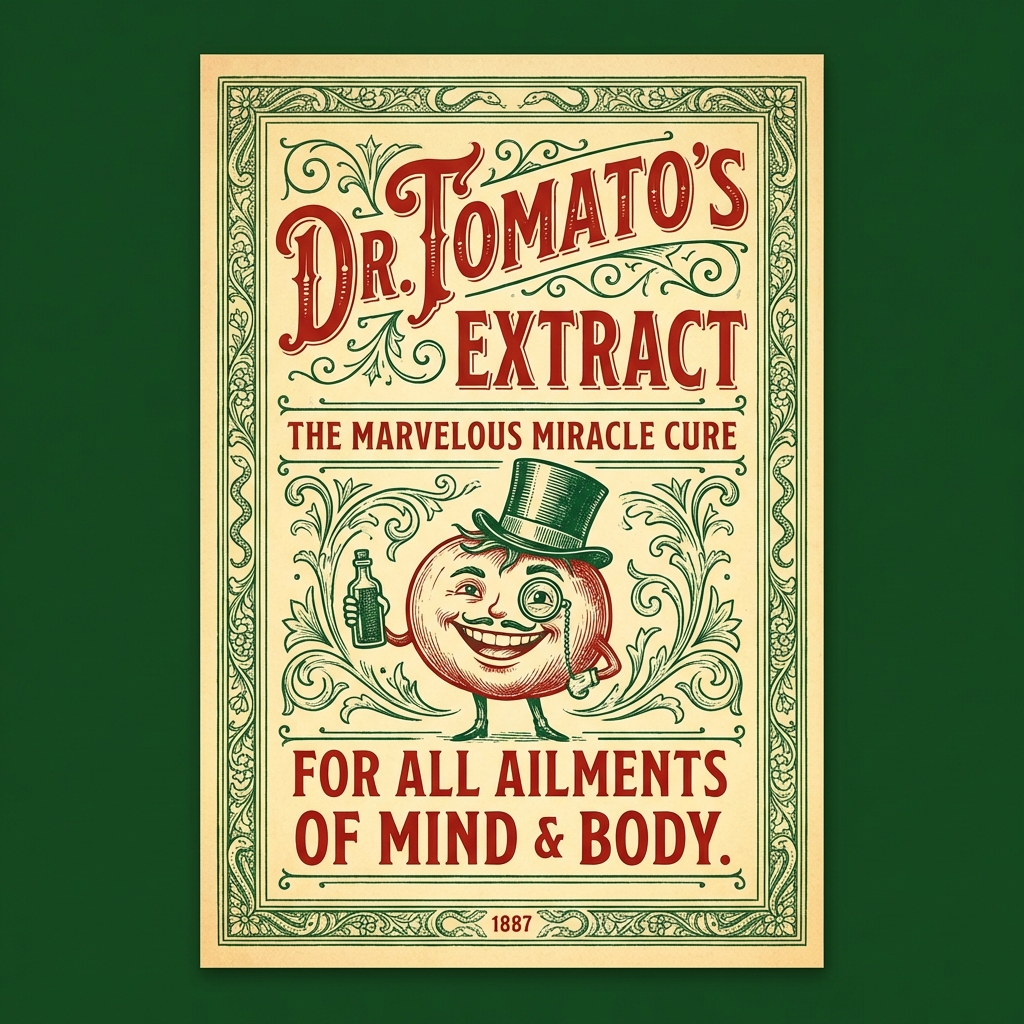
In 1834, an Ohio physician named John Cook Bennett began promoting tomato extract as a cure for diarrhea, indigestion, and jaundice. He published articles in medical journals, gave lectures, and eventually concentrated his recipe into pills that he sold across the country. For about a decade, Americans could buy "Dr. Miles' Compound Extract of Tomato" at their local pharmacy, right alongside other dubious remedies of the era.
Bennett wasn't entirely wrong about tomatoes. They do contain lycopene, vitamins A and C, and various antioxidants that modern research has linked to modest health benefits. But in the early 1800s, many Americans still viewed tomatoes with deep suspicion. The fruit belongs to the nightshade family, and a persistent folk belief held that eating them could be fatal. Some people called them "poison apples." Bennett's real contribution wasn't medical science but marketing: he helped make the tomato respectable.
The word "ketchup" itself predates the tomato version by at least a century. It derives from "kecap," a fermented fish sauce from Southeast Asia that Dutch and British traders brought to Europe in the 1600s. Early English ketchups were made from mushrooms, anchovies, walnuts, or oysters—anything that could produce a savory, pourable liquid. Tomatoes didn't enter the recipe until the early 1800s, when American cooks began experimenting with the fruit.
The version most people recognize today came from Henry Heinz, who started selling his tomato ketchup in 1876. Heinz made two critical innovations. First, he added vinegar to preserve the product naturally, at a time when many competitors used coal tar and sodium benzoate. Second, he put it in clear glass bottles to demonstrate its purity—a direct appeal to consumers wary of food adulteration. The strategy worked. By 1905, Heinz was selling five million bottles per year.
Bennett's tomato pills, meanwhile, attracted imitators who made increasingly absurd claims for the fruit's curative powers. The backlash from the medical establishment eventually killed the tomato-as-medicine idea entirely. What survived was the condiment.
Filed under Food, The 1800s, AmericaFurther reading: Wikipedia
Print it for the office looPick your next sheet
Judge a story by its emoji. No peeking at titles.