The Dyatlov Pass Incident
In February 1959, nine experienced hikers died under unexplained circumstances in the northern Ural Mountains of Russia. The group, led by 23-year-old Igor Dyatlov, was attempting a challenging winter route to Otorten, a peak whose name in the local Mansi language translates roughly to "Don't go there." They never reached it.
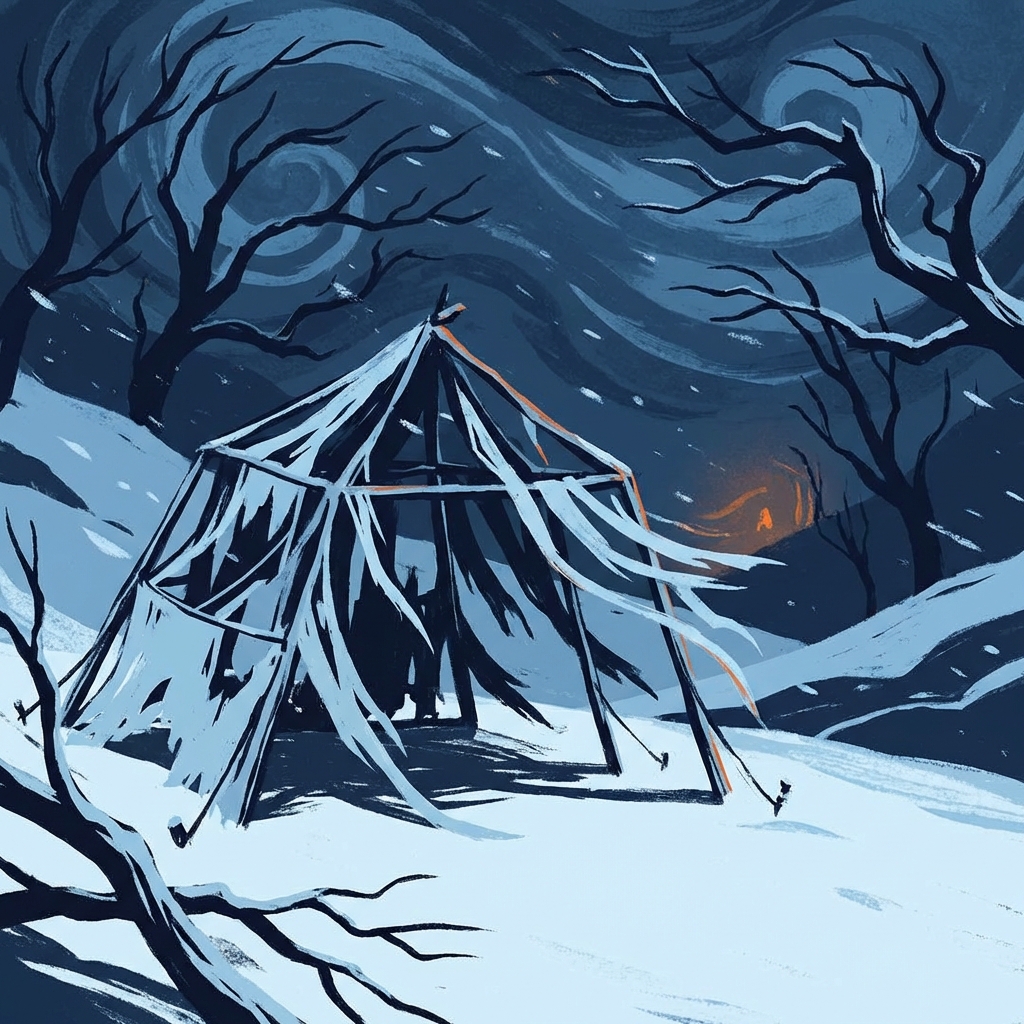
When the group failed to send a telegram by their expected return date, search parties set out and found their tent on February 26, pitched on the slope of a mountain called Kholat Syakhl—Mansi for "Dead Mountain." The tent had been slashed open from the inside. Footprints in the snow, some from bare feet and some from socks, led away from the tent and down the slope toward a treeline roughly a mile away. The temperature that night was estimated at minus 30 degrees Celsius.
The first two bodies were found near the remains of a small fire at the edge of the forest, wearing almost nothing. Three more, including Dyatlov, were discovered at various points between the fire and the tent, apparently trying to return. It took more than two months to find the remaining four, buried under 13 feet of snow in a ravine some 250 feet from the fire. Two of those had major chest fractures that a doctor compared to injuries from a car crash, but with no external wounds. One was missing her tongue, eyes, and part of her lips.
The Soviet investigation concluded with a verdict of "compelling natural force" and sealed the case files for decades. Theories have since multiplied: avalanche, military testing, infrasound-induced panic, attacks by local Mansi people, even a Soviet coverup of weapons testing. None fully satisfied the evidence.
In 2019, Russian authorities reopened the investigation and in 2020 announced that a small slab avalanche was the most likely cause. Researchers from Switzerland published a supporting analysis in 2021, demonstrating through computer modeling that a delayed avalanche triggered by a specific combination of wind and snow accumulation could explain the injuries. The group, they argued, fled in panic from the collapsing tent and died of hypothermia in the darkness.
Not everyone was persuaded.
Filed under Mysteries, Europe, The 1900sFurther reading: Wikipedia
Print it for the office looPick your next sheet
Judge a story by its emoji. No peeking at titles.