The Corpse Flower
The titan arum blooms so rarely and smells so terrible that botanic gardens issue public alerts when one is about to open. Visitors line up, sometimes for hours, to experience a scent most people describe as rotting flesh. The plant earns its common name—the corpse flower—honestly.
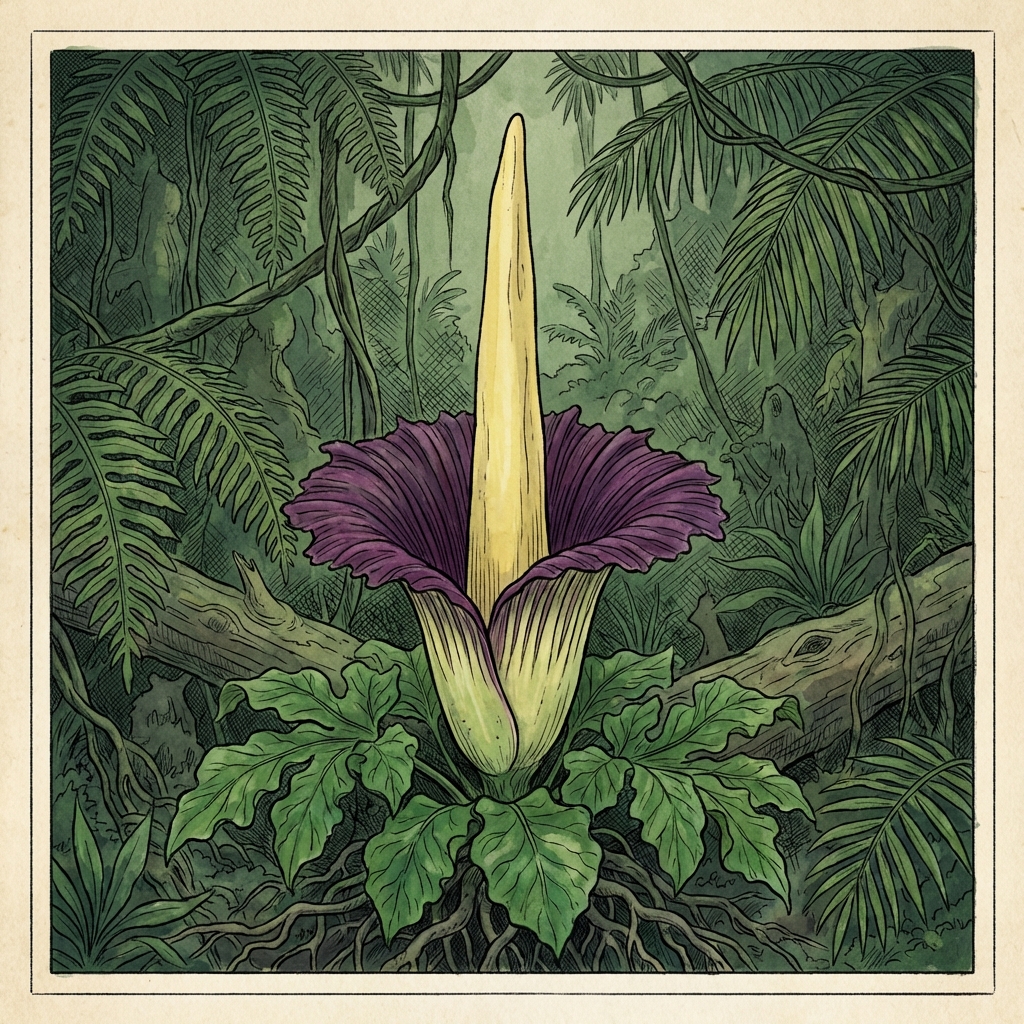
Native to the rainforests of western Sumatra, the titan arum produces the largest unbranched flower structure in the plant kingdom. When it blooms, the central spike, called a spadix, can reach over ten feet tall. The fleshy outer petal, called a spathe, unfurls into a deep reddish-purple funnel that measures up to four feet across. The entire structure resembles a giant, malevolent calla lily.
The smell is the point. The titan arum relies on carrion beetles and flesh flies for pollination—insects that normally lay their eggs in dead animals. To attract them, the plant heats its spadix to approximately human body temperature, which helps volatilize the cocktail of chemicals responsible for the odor. Analysis has identified compounds including dimethyl trisulfide (the smell of aged cheese and rotting garlic), trimethylamine (rotting fish), and isovaleric acid (sweaty socks). The deep red color of the spathe further mimics decomposing meat.
A titan arum typically waits seven to ten years between bloomings, spending most of its life as an unremarkable green stalk with a single compound leaf. Some specimens in cultivation have gone fifteen years without flowering. When a bloom does occur, it lasts only 24 to 48 hours before collapsing, which partly explains the public fascination—catch it now or wait another decade.
The first titan arum to bloom in cultivation did so in 1889 at the Royal Botanic Gardens, Kew, in London. The Italian botanist Odoardo Beccari had collected the plant in Sumatra in 1878 and sent seeds to Kew. Since then, recorded bloomings have become more frequent as botanical institutions have improved cultivation techniques, but each event still draws crowds. The Huntington Library in California recorded over 10,000 visitors during a single bloom in 2023. Most people, after one close sniff, step back.
Filed under Around the World, Modern Times, Animals & NatureFurther reading: Wikipedia
Print it for the office looPick your next sheet
Judge a story by its emoji. No peeking at titles.