Fordlandia
In 1928, Henry Ford purchased 2.5 million acres of land along the Tapajós River in the Brazilian Amazon and built a town called Fordlandia. His plan was to grow rubber trees for his automobile tires and, in the process, transplant American small-town life to the tropics. The project was a catastrophe from start to finish.
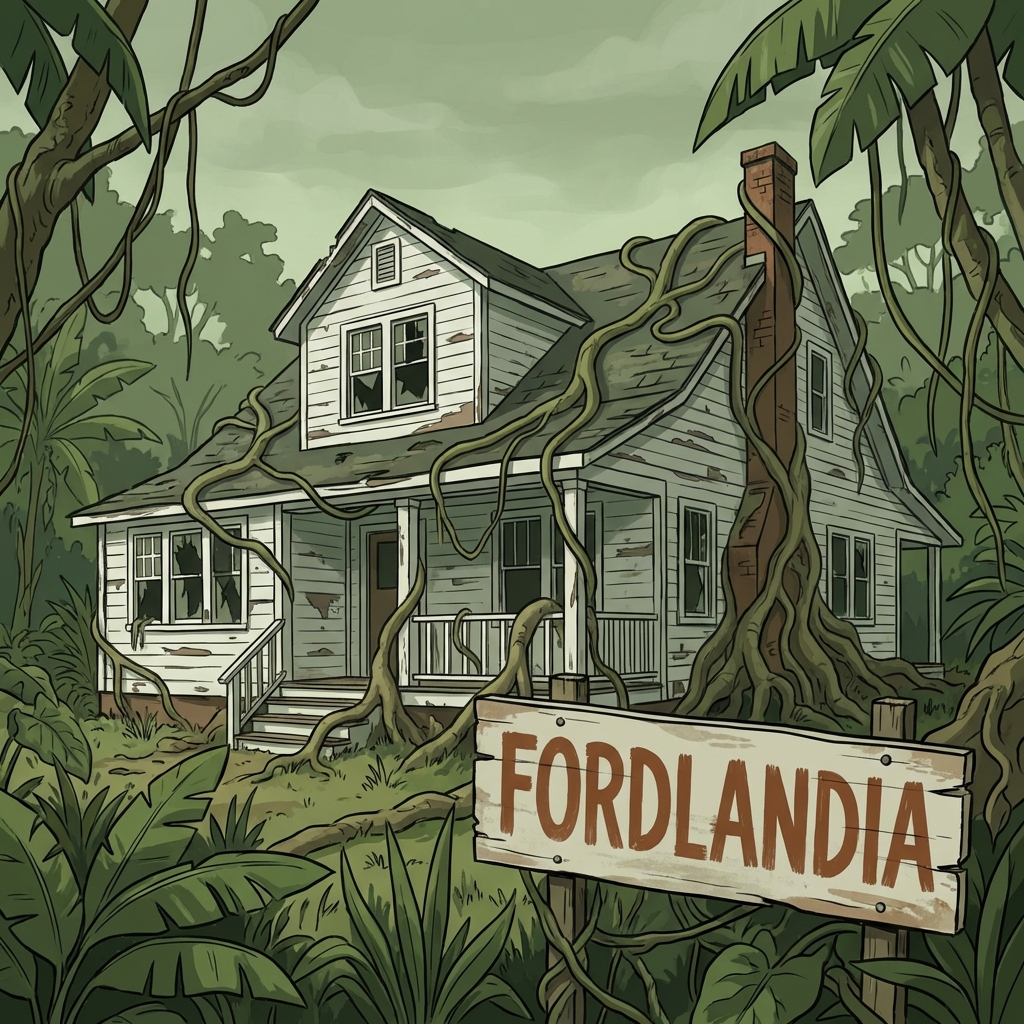
Ford's company had been buying rubber from British-controlled plantations in Southeast Asia, and he wanted to break that dependency. The Amazon was rubber's native habitat, which seemed like an advantage. Ford sent managers from Michigan to oversee construction of a complete American-style community: clapboard houses, a hospital, a school, a library, a golf course, and a power plant. Workers were expected to eat American food, live in American-style housing, and observe Ford's personal lifestyle preferences, which included mandatory square dancing and a prohibition on alcohol.
The rubber trees were the first disaster. Ford's botanists planted them in dense rows, mimicking the efficient plantation model used in Asia. In the Amazon, however, rubber trees grow naturally spaced far apart, which limits the spread of South American leaf blight, a fungal disease that thrives when trees are clustered. The plantation was devastated. The blight destroyed crop after crop, and no amount of replanting could solve a problem rooted in the growing method itself.
The social engineering failed equally. Brazilian workers resented the imposed diet—especially the mandatory American meals served in a cafeteria. A riot broke out in 1930, during which workers smashed the cafeteria, the time clocks, and several company trucks. Many workers simply left. Ford's managers, few of whom spoke Portuguese or had any experience with tropical agriculture, struggled to recruit replacements.
Ford never visited Fordlandia. In 1934, the operation moved to a second site called Belterra, but results were similar. By the time synthetic rubber became commercially viable during World War II, the entire enterprise was obsolete. Ford's grandson sold both sites back to the Brazilian government in 1945 for a fraction of the investment. The total loss exceeded $20 million—about $340 million in today's dollars.
Filed under Around the World, Disasters & Drama, The 1900sFurther reading: Wikipedia
Print it for the office looPick your next sheet
Judge a story by its emoji. No peeking at titles.