The Dancing Plague of 1518
In July 1518, a woman named Frau Troffea stepped into a narrow street in Strasbourg and began to dance. She did not stop.
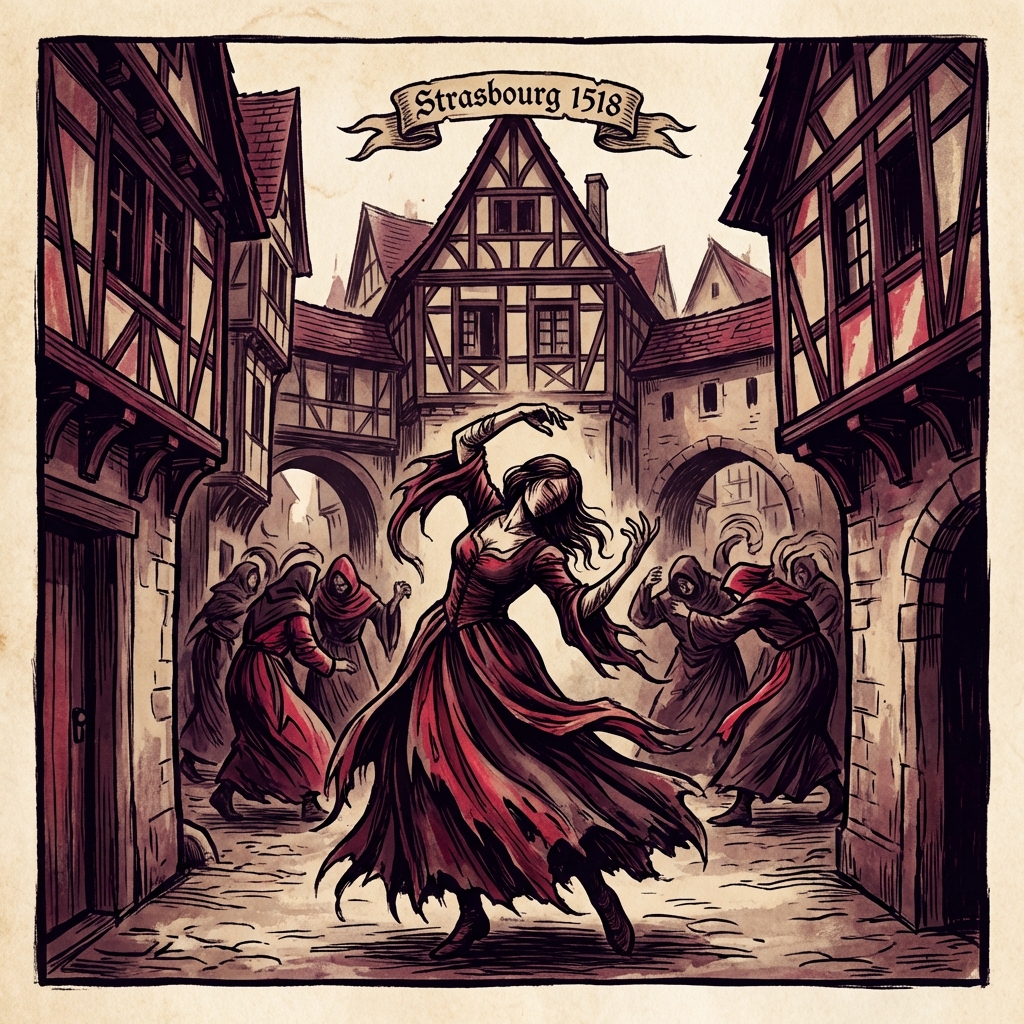
Her husband pleaded with her, but she continued through the day and into the night, finally collapsing from exhaustion. The next morning, she resumed on swollen, bleeding feet.
Within a week, thirty people had joined her. By August, the number had reached 400. The afflicted danced in the streets with expressions that witnesses described as anguished rather than joyful, their bodies jerking in spasmodic movements they seemed unable to control. Some danced until they collapsed from heart attacks, strokes, or sheer exhaustion. Contemporary accounts suggest as many as fifteen people may have died each day at the outbreak's peak, though Strasbourg's official records do not explicitly confirm a death toll.
City authorities made the situation worse. Believing the dancers needed to purge whatever had possessed them, officials hired musicians and cleared guild halls to give them space. The music only intensified the frenzy. It was not until September, when the remaining dancers were transported to a mountaintop shrine dedicated to Saint Vitus, that the epidemic finally subsided. The afflicted prayed at the shrine, received small crosses, and were led in a ritual that involved walking around a wooden figure of the saint. Most recovered.
The dancing plague of 1518 was neither the first nor last such outbreak, but it was the largest. Historian John Waller, who studied the event extensively, concluded it was likely a case of mass psychogenic illness triggered by extreme stress. Strasbourg's residents had endured years of famine, waves of smallpox and syphilis, and flooding that destroyed crops. Local superstition held that Saint Vitus had the power to curse people with compulsive dancing, and in a population pushed to psychological breaking point, that belief may have become self-fulfilling.
The dancing stopped as mysteriously as it had started. By autumn, the streets were quiet again.
Filed under Before 1800, Mysteries, QuirkyFurther reading: Wikipedia
Print it for the office looPick your next sheet
Judge a story by its emoji. No peeking at titles.