The Kentucky Meat Shower
On March 9, 1876, chunks of meat fell from a clear sky onto a strip of land near Rankin in Bath County, Kentucky. The area affected was roughly 100 yards long and 50 yards wide. The pieces were fresh, some as large as four inches square. Two men reportedly tasted them and said they resembled mutton or venison.
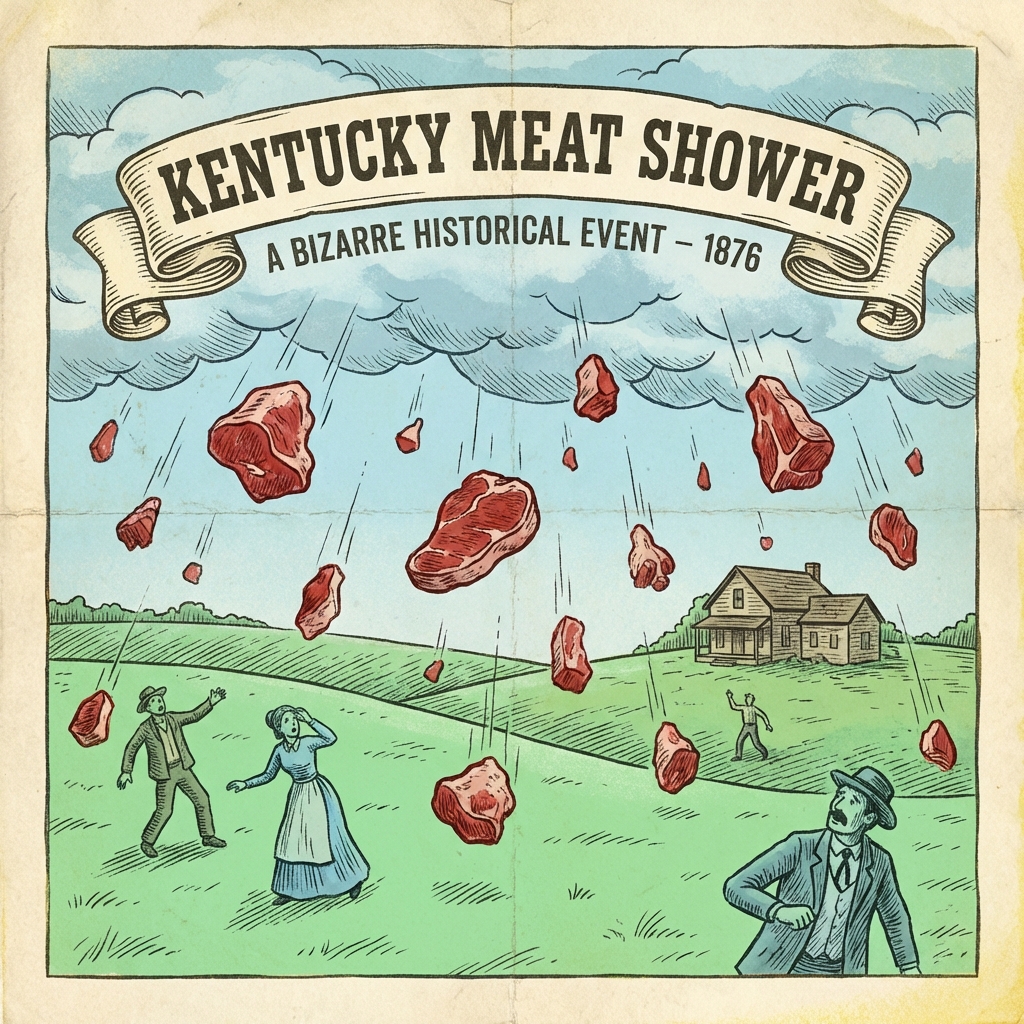
The account was first published in Scientific American later that month, based on a report from a local correspondent. The New York Times picked it up. The event attracted enough scientific interest that several specimens were preserved and examined by histologists, though the available preservation methods in 1876 were limited.
Leopold Brandeis, a histologist, examined samples and identified them as lung tissue, muscle, and cartilage. Other scientists who analyzed the specimens disagreed on the specifics. Some thought the tissue was from a horse. Others identified what they believed to be fetal tissue from a sheep. The samples were small, degraded, and examined by multiple people with different conclusions, which has made definitive identification difficult.
The explanation that gained the most traction at the time came from L.D. Kastenbine, a physician writing in the Louisville Medical News. He proposed that the meat had been disgorged by vultures. Turkey vultures, common in Kentucky, are known to projectile-vomit when startled or when they need to lighten their load for flight. A large group of vultures flying at altitude, if startled simultaneously, could theoretically produce a shower of partially digested meat. The hypothesis was consistent with the size and condition of the specimens.
Others proposed a waterspout or tornado that picked up offal from a slaughterhouse, but no such weather event was recorded in the area that day. The sky was reportedly clear.
No similar event has been documented in the same region since. The meat shower remains in that category of 19th-century oddities that generated enormous public interest, produced ambiguous physical evidence, and settled into the historical record without a fully confirmed explanation.
Filed under Mysteries, The 1800s, AmericaFurther reading: Wikipedia
Print it for the office looPick your next sheet
Judge a story by its emoji. No peeking at titles.