How Aspirin Was Discovered Twice
Willow bark has been used as a pain remedy for thousands of years.
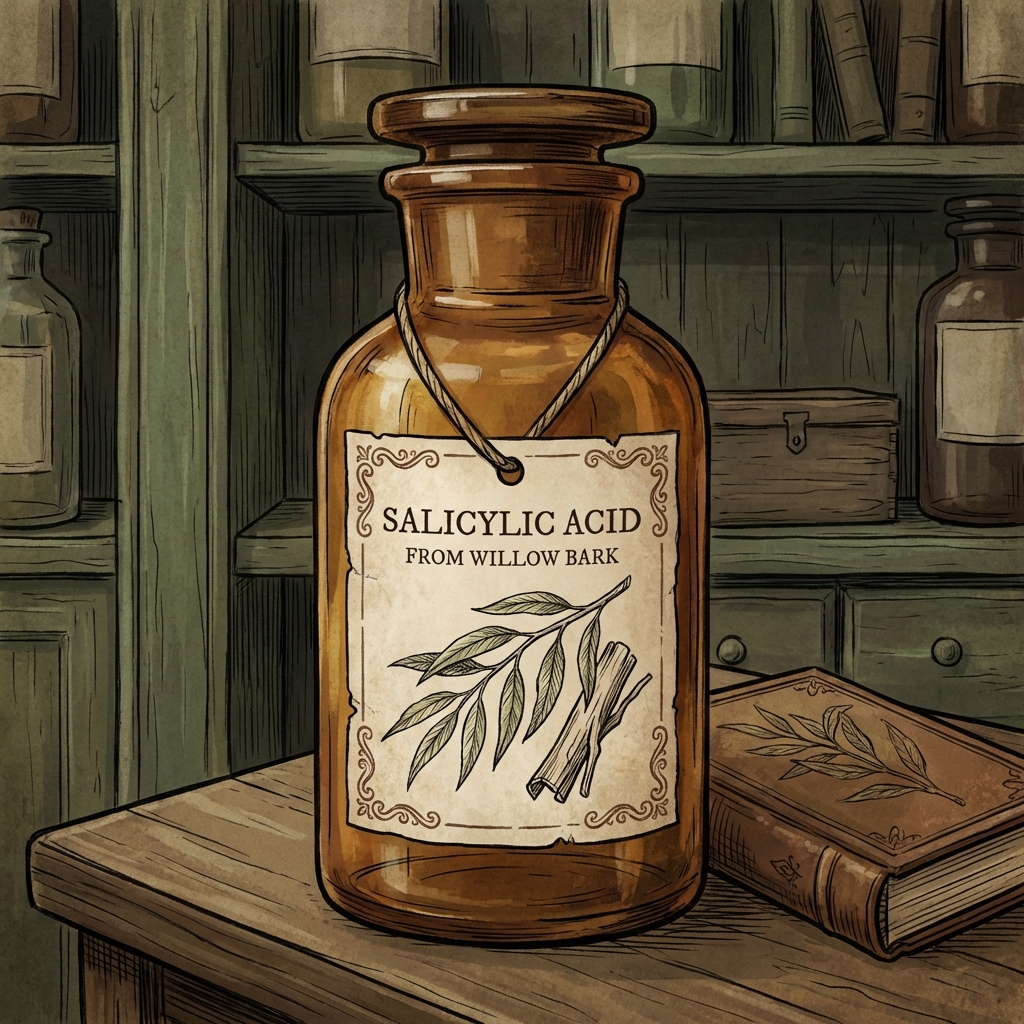
Hippocrates recommended it around 400 BC. Ancient Egyptian medical texts mention it. Indigenous peoples across multiple continents chewed it independently. The active ingredient—salicin, which the body converts to salicylic acid—is an effective analgesic and anti-inflammatory. The problem was that it also destroyed the stomach.
In 1853, a French chemist named Charles Frédéric Gerhardt synthesized acetylsalicylic acid, a modified form of salicylic acid that he hoped would be gentler on digestion. His process was impure and unstable, and he didn't pursue it further. The compound sat in the literature, essentially forgotten, for over forty years.
In 1897, Felix Hoffmann, a chemist at the German dye company Friedrich Bayer & Co., synthesized acetylsalicylic acid again, this time in a stable, pure form. The standard account, promoted by Bayer for decades, claims Hoffmann was motivated by his father's arthritis pain and the stomach problems caused by the salicylic acid his father was taking. Hoffmann searched the chemical literature, found Gerhardt's earlier work, and improved the synthesis.
There is a complication. Arthur Eichengrün, another Bayer chemist who was Hoffmann's supervisor, later claimed that the aspirin project was his idea and his direction. Eichengrün was Jewish, and his contributions were deliberately erased during the Nazi period. He published his account in 1949, attributing the key insight to himself and describing Hoffmann as a capable technician following orders. Bayer has never fully acknowledged Eichengrün's claim, and the historical evidence remains contested.
Bayer registered the name "Aspirin" in 1899 and began selling it as a powder. It became the best-selling drug in the world. After Germany lost World War I, the Treaty of Versailles stripped Bayer of its trademark in many countries, which is why "aspirin" is lowercase and generic in most of the English-speaking world.
More than a century later, researchers are still discovering new properties. Aspirin's anti-clotting effects, first identified in the 1960s, have made it a standard preventive treatment for heart attacks—a use its inventors never imagined.
Filed under The 1800s, Inventions, ScienceFurther reading: Wikipedia
Print it for the office looPick your next sheet
Judge a story by its emoji. No peeking at titles.