Why Flamingos Stand on One Leg
Flamingos spend hours standing on one leg, often while sleeping. The behavior is so consistent and so seemingly uncomfortable that it has attracted scientific attention for decades. The leading explanation isn't about comfort at all—it's about heat.
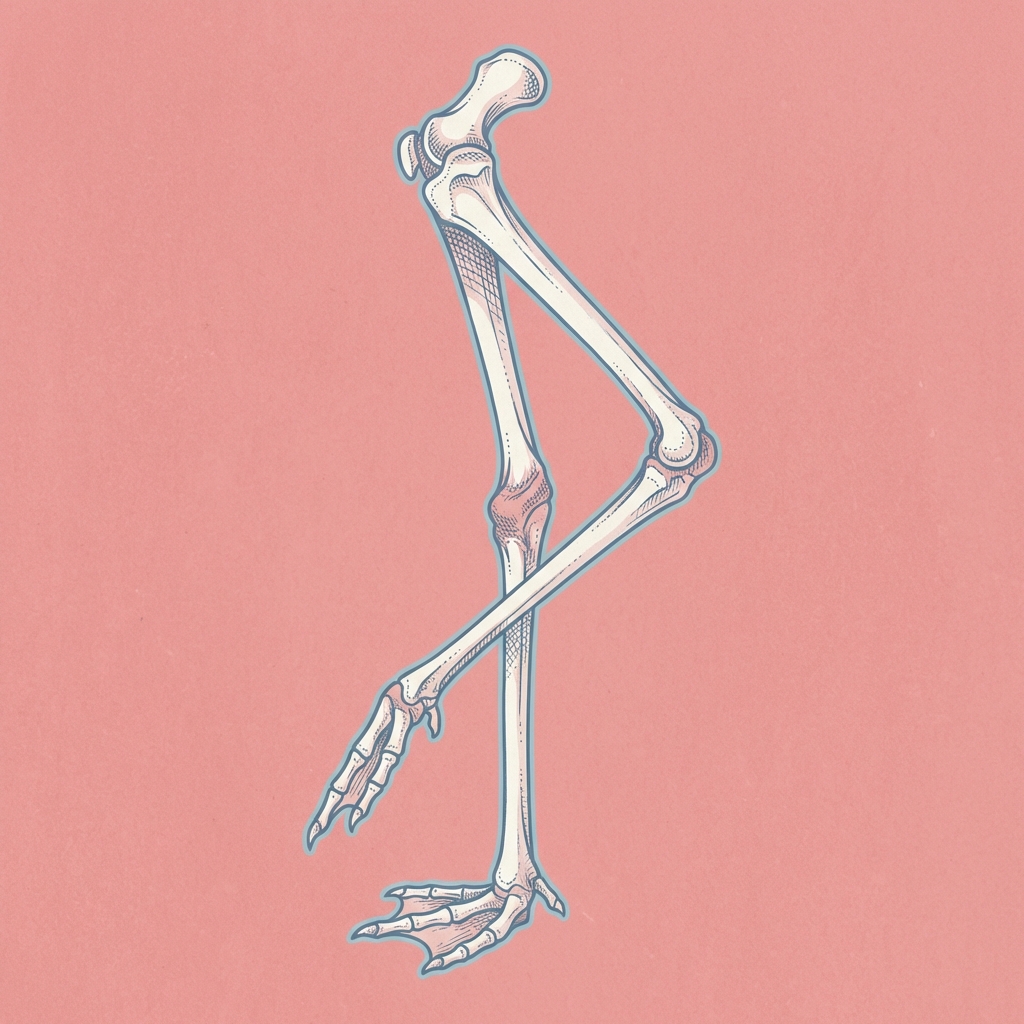
Flamingos are wading birds that spend most of their lives standing in water, which conducts heat away from the body about 25 times faster than air. Tucking one leg up into the plumage reduces the surface area exposed to water by half, significantly cutting heat loss. The hypothesis is simple: one leg in the water is warmer than two.
This thermoregulation theory was supported by a 2009 study that observed flamingos at a zoo in Philadelphia. Researchers found that the birds were significantly more likely to stand on one leg when temperatures were cooler and more likely to stand on two legs in warmer conditions. The correlation was strong enough to suggest that temperature was a primary driver of the behavior.
But temperature isn't the whole story. Flamingos also stand on one leg on dry land and in warm weather, which the thermoregulation model doesn't fully explain. A 2017 study from the Georgia Institute of Technology explored the biomechanics and found something unexpected: standing on one leg actually requires less muscular effort than standing on two.
The researchers examined flamingo cadavers and discovered that the bird's skeletal and joint structure creates a passive locking mechanism when one leg is directly beneath the body. The bones essentially stack into a stable column that requires no active muscle engagement to maintain. A dead flamingo, the researchers demonstrated, could be balanced on one leg without any external support. On two legs, the bird's anatomy doesn't lock in the same way, which means standing on two legs requires more continuous muscular adjustment.
The most likely explanation combines both factors. Standing on one leg saves energy through passive skeletal mechanics and conserves heat by minimizing contact with cold water. It's a posture that is simultaneously easier and warmer—which is why they do it so much.
Filed under Animals & Nature, ScienceFurther reading: Wikipedia
Print it for the office looPick your next sheet
Judge a story by its emoji. No peeking at titles.