Why Old Books Smell Good
The smell of old books has a name: bibliosmia. It's a compound aroma produced by the chemical decomposition of paper, binding glue, and ink over time. People consistently describe it as pleasant—vanilla, almond, caramel, sometimes chocolate—and in 2009, a team of researchers at University College London analyzed the chemistry to find out why.
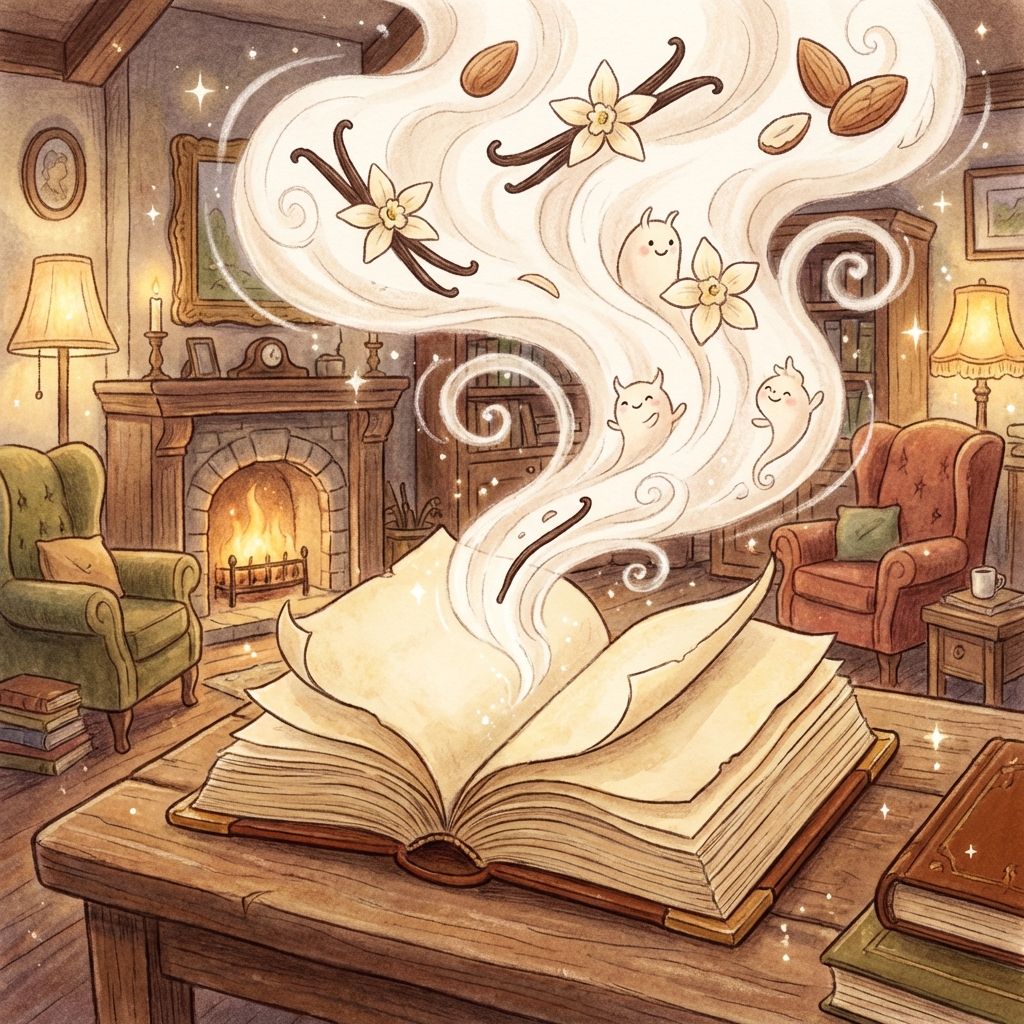
Paper is made primarily of cellulose, a polymer of glucose molecules. As paper ages, the cellulose breaks down through a process called oxidative degradation, releasing volatile organic compounds into the air. Among the most prominent are vanillin (the primary compound in vanilla extract), benzaldehyde (which smells like almonds), furfural (fresh bread), ethyl hexanol (slightly floral), and toluene and ethyl benzene (faintly sweet). The combination produces the distinctive warm, complex scent that readers associate with old bookshops and libraries.
The UCL researchers analyzed the headspace—the air directly above—aged paper samples and identified fifteen individual compounds. They found that the chemical signature was consistent enough to serve as a diagnostic tool: the ratio of certain compounds could indicate how badly a book had degraded, potentially allowing conservators to assess damage without touching fragile pages.
Different papers produce different smells depending on their composition. Books printed before the mid-1800s were made from cotton and linen rag paper, which ages slowly and produces a milder, earthier scent. After the 1840s, most publishers switched to wood-pulp paper, which contains lignin—the polymer that makes wood rigid. Lignin breaks down much faster than cellulose and produces a sharper, more acidic smell. It's also why old paperbacks yellow faster than old hardcovers, and why cheap newsprint turns brown within weeks.
New books have their own distinct smell, caused by volatile compounds off-gassing from modern adhesives, inks, and paper coatings. But this smell lacks the vanilla-dominant warmth of aged paper. The scent people associate with libraries and secondhand bookshops is specifically the product of decades of slow chemical change.
There's no evolutionary reason for finding this particular combination pleasant. It's an accident of chemistry that decomposing cellulose happens to release the same compounds found in dessert.
Filed under Modern Times, Culture & Words, ScienceFurther reading: Wikipedia
Print it for the office looPick your next sheet
Judge a story by its emoji. No peeking at titles.