How Mauve Changed Fashion Forever
In 1856, an eighteen-year-old chemistry student in London accidentally created the first synthetic dye while trying to synthesize quinine, a malaria treatment.
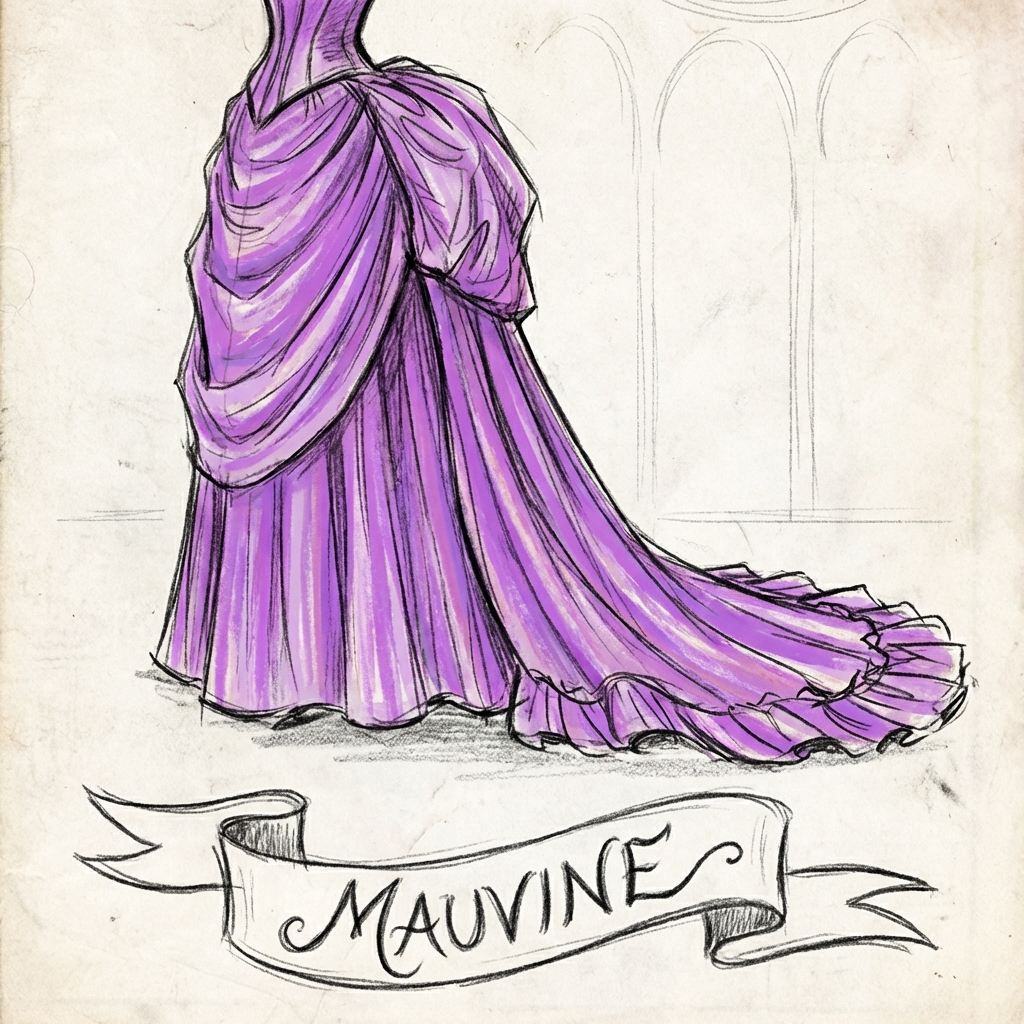
William Henry Perkin was working in a makeshift laboratory at his family's home when a failed experiment left a reddish-brown residue at the bottom of his flask. Most chemists would have washed it out. Perkin, curious, added alcohol and produced a vivid purple solution that stained silk beautifully and didn't fade.
He called it mauveine, after the French word for the mallow flower. Within two years, Perkin had patented the dye, built a factory in Greenford on the outskirts of London, and begun selling it commercially. The timing was extraordinary. Queen Victoria wore a mauve-dyed silk gown to the wedding of her daughter Princess Victoria in 1858. Empress Eugénie of France favored the color. Fashion magazines declared purple the shade of the season. London postage stamps were printed in mauve. Punch magazine called the craze "mauve measles."
Before Perkin, virtually all dyes were extracted from natural sources—plants, insects, shellfish. Purple was among the rarest and most expensive. Tyrian purple, used by Roman emperors, came from the mucus of predatory sea snails, and producing a single gram required thousands of them. The color had been reserved for royalty for centuries because almost nobody else could afford it.
Mauveine made purple cheap. It also launched an entirely new industry. German chemists, recognizing the commercial potential, began systematically developing other synthetic dyes—fuchsin, alizarin, indigo—and by the 1880s, Germany dominated the global dye market. The same chemical knowledge that produced dyes led directly to advances in pharmaceuticals, explosives, and eventually plastics. The modern chemical industry traces its origins to Perkin's accident.
Perkin retired at 36, wealthy enough never to work again. He spent the rest of his life in private research. The Royal Society of Chemistry now awards the Perkin Medal in his honor.
Filed under Culture & Words, The 1800s, ScienceFurther reading: Wikipedia
Print it for the office looPick your next sheet
Judge a story by its emoji. No peeking at titles.