The Boy Who Built a Nuclear Reactor
In 2008, a fourteen-year-old from Texarkana, Arkansas, named Taylor Wilson became the youngest person in history to achieve nuclear fusion. He built a working fusor—a device that fuses atomic nuclei together—in a laboratory his parents set up for him in the garage.
Wilson had been fascinated by nuclear physics since he was ten, when he began collecting radioactive materials and teaching himself about atomic energy from textbooks and online forums. His parents, Kenneth and Tiffany Wilson, were not scientists. His father worked in Coca-Cola bottling and his mother at a yoga studio. When their son asked for a Geiger counter for his eleventh birthday, they were concerned but supportive. When he began asking for uranium samples, they sought professional guidance.
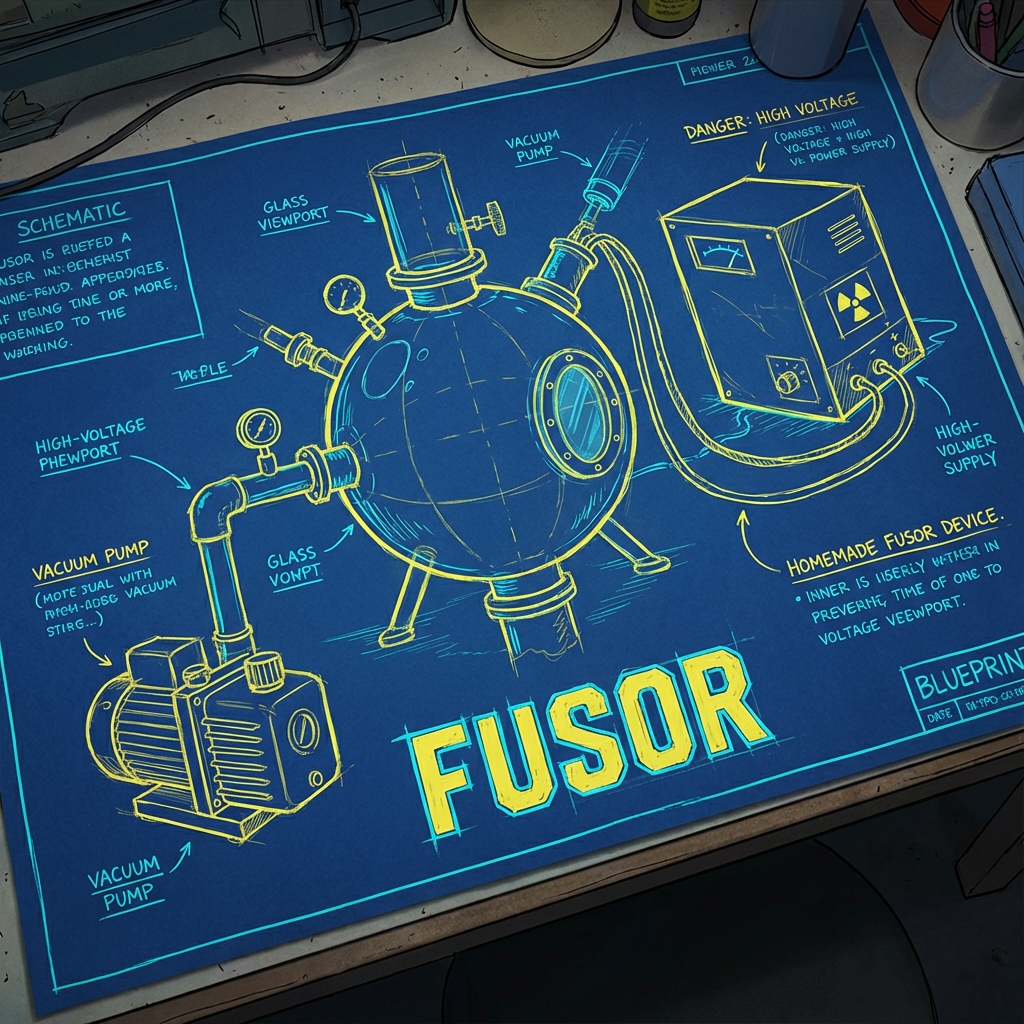
That guidance led them to Ron Phaneuf, a professor of physics at the University of Nevada, Reno, who agreed to mentor the boy. The university gave Wilson access to a laboratory and equipment, and by age 14, he had built a Farnsworth-Hirsch fusor—a tabletop device that uses an electric field to accelerate and confine deuterium ions until they collide and fuse, releasing neutrons. The device doesn't produce energy in useful quantities, but it demonstrates real nuclear fusion, and building one requires genuine understanding of plasma physics, high-voltage engineering, and vacuum systems.
Wilson's reactor was verified by university faculty, and he presented his work at the Intel International Science and Engineering Fair in 2008, winning first place. He went on to develop a nuclear radiation detector that was smaller and cheaper than existing models and could be used at ports to detect smuggled nuclear materials. He presented this project to the Department of Energy and later at a TED talk.
The Farnsworth fusor isn't a new invention—Philo Farnsworth, best known for inventing electronic television, developed the concept in the 1960s. Dozens of amateur scientists have built working fusors in their homes. What distinguished Wilson's case was his age and the sophistication of his approach—and the fact that his parents had to explain to the school principal why their son was asking to borrow the cafeteria's helium supply.
Filed under Modern Times, America, ScienceFurther reading: Wikipedia
Print it for the office looPick your next sheet
Judge a story by its emoji. No peeking at titles.