How Lego Nearly Went Bankrupt
By 2003, the Lego Group was losing roughly a million dollars a day. The Danish toymaker that had defined construction play for half a century was on the verge of collapse, and the reasons were almost entirely self-inflicted.
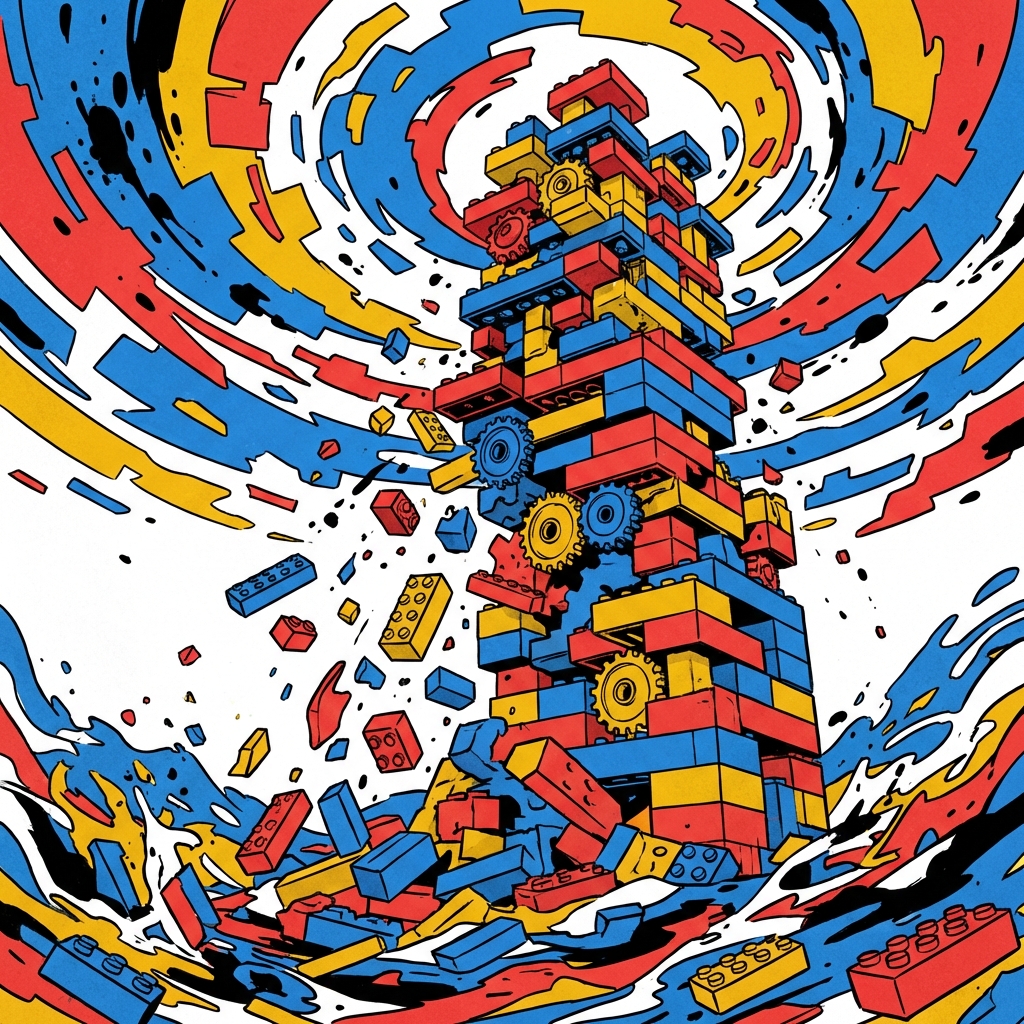
The crisis had its roots in the mid-1990s, when Lego's management concluded that the traditional brick was becoming obsolete. Children, they believed, were migrating to video games, and the company needed to diversify. Over the next several years, Lego launched clothing lines, theme parks, a television show, jewelry, and a range of products that had little connection to plastic bricks. They opened Legoland parks in England, Germany, and California. They released Lego video games, produced a Lego magazine, and invested in the Lego Media division. Many of these ventures lost money.
Simultaneously, the company made its core product harder to use. Designers created increasingly specialized pieces—bricks molded for a single specific set that couldn't be repurposed. The number of unique Lego elements grew from about 6,000 to over 14,000 between 1997 and 2004. Manufacturing costs soared. Sets became more complex and less creative, essentially asking children to follow instructions rather than build freely.
In 2004, the founding Kirk Kristiansen family brought in Jørgen Vig Knudstorp, a 35-year-old former McKinsey consultant and the first CEO from outside the family. Knudstorp's diagnosis was blunt: Lego had tried to become a lifestyle brand and lost sight of what it was. His prescription was equally direct—cut everything that wasn't bricks.
The company sold its theme parks, closed Lego Media, discontinued the clothing and jewelry lines, and reduced the number of unique brick elements by half. It refocused on construction play, introduced more affordable sets, and rebuilt relationships with its adult fan community, which had remained loyal throughout the crisis.
The turnaround was rapid. By 2006, profits were rising. By 2015, Lego had overtaken Mattel to become the world's largest toy company by revenue. The lesson was one the brick itself had always taught: complexity without purpose is just mess.
Filed under Culture & Words, Europe, The 1900sFurther reading: Wikipedia
Print it for the office looPick your next sheet
Judge a story by its emoji. No peeking at titles.