The 1904 Olympic Marathon
The marathon at the 1904 Summer Olympics in St. Louis is widely considered the most absurd sporting event in modern history. Of the 32 runners who started the race on the afternoon of August 30, only 14 finished. The rest dropped out from heat exhaustion, injury, nausea, or, in one case, being chased off the course by wild dogs.
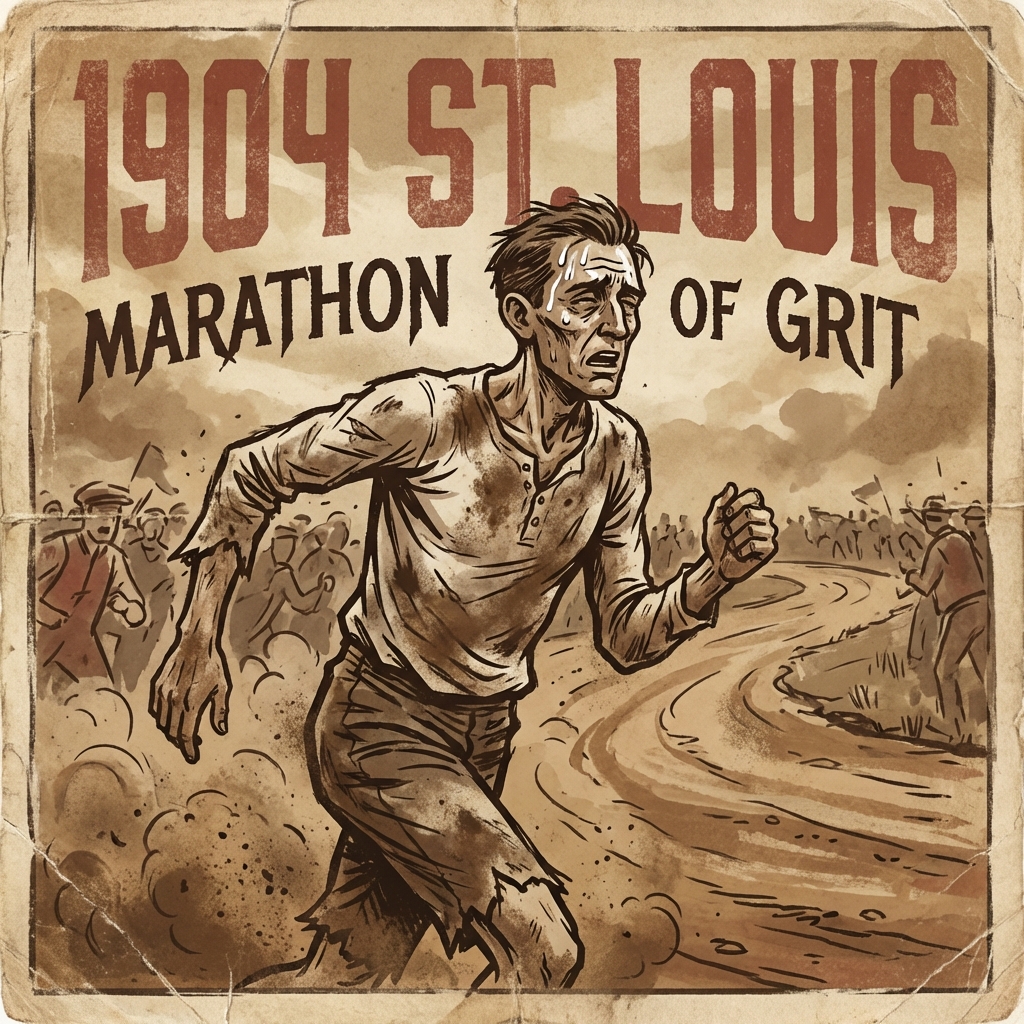
The race was held in the middle of a Missouri summer. The temperature was 90 degrees Fahrenheit with high humidity. The course ran almost entirely on dusty dirt roads shared with automobile traffic, which kicked up clouds of choking dust. There was one water station on the entire 24.85-mile route—an intentional decision by the race organizer, James Sullivan, who wanted to study the effects of dehydration on athletic performance.
The first man to cross the finish line was Fred Lorz of New York, who jogged into the stadium to cheers and was about to be presented with the gold medal when it was discovered that he had ridden in a car for eleven miles of the course. His car had broken down, and he ran the final stretch to the stadium. He claimed it was a joke. He was banned from competition (briefly) and stripped of the medal.
The actual winner was Thomas Hicks, an English-born American. Hicks was in serious distress for much of the race. His trainers administered doses of strychnine mixed with egg whites and brandy—a common performance-enhancing cocktail of the era, though potentially lethal. Hicks hallucinated near the end and had to be physically supported across the finish line by two assistants. He nearly died afterward.
Among the other competitors: Felix Carvajal, a Cuban postal worker who had raised his own travel money, arrived having eaten nothing but roadside apples (which may have been crabapples) and suffered severe stomach cramps. Len Taunyane, a South African runner, was chased a mile off course by dogs. Andarín Carvajal stopped to take a nap.
The 1904 marathon helped establish the modern rules governing aid stations, course management, and the use of stimulants.
Filed under Culture & Words, America, QuirkyFurther reading: Wikipedia
Print it for the office looPick your next sheet
Judge a story by its emoji. No peeking at titles.