Why Stradivarius Violins Sound So Good
Between roughly 1680 and 1720, Antonio Stradivari built about 1,100 string instruments in his workshop in Cremona, Italy.
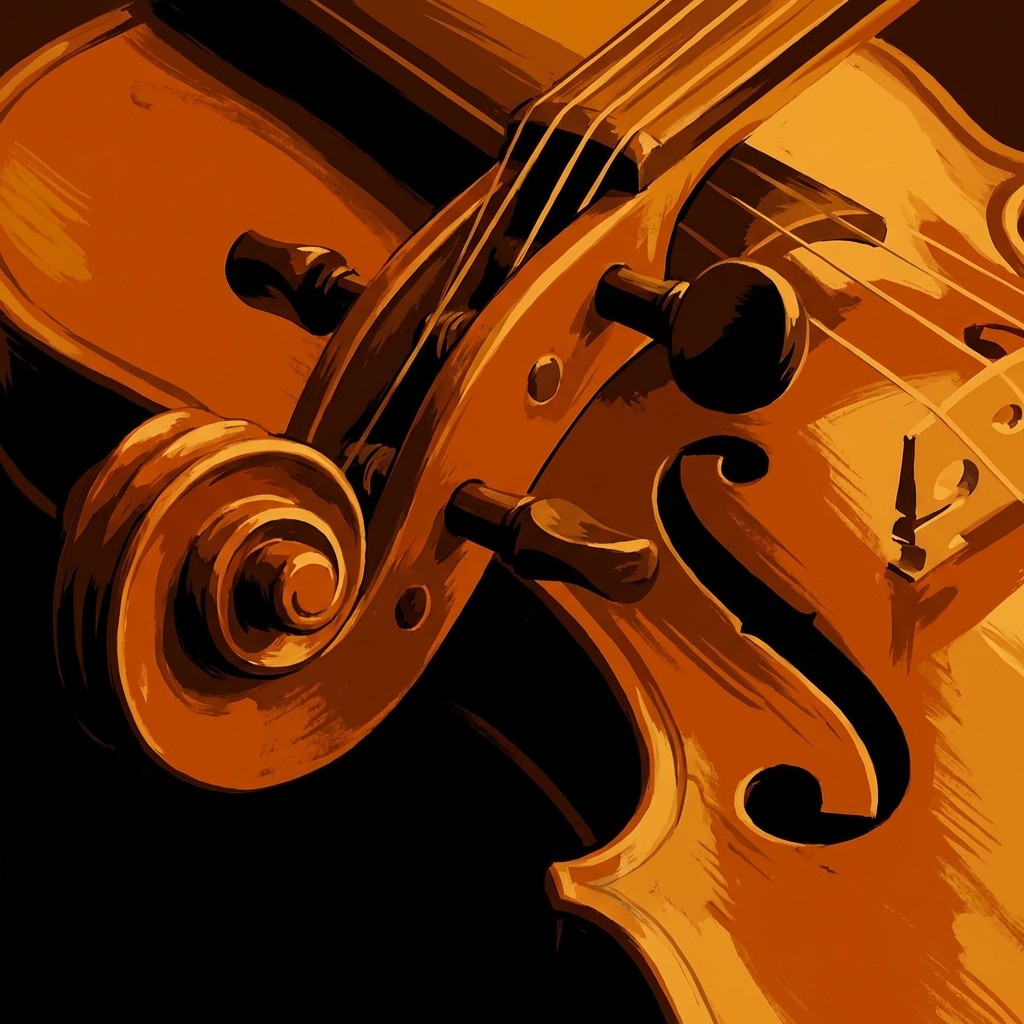
Around 650 survive. They are consistently regarded by musicians and acousticians as the finest violins ever made, and their market value reflects it—a Stradivarius sold at auction in 2011 for $15.9 million. The question of why they sound the way they do has occupied scientists for over a century, and nobody has a definitive answer.
The simplest explanation is that Stradivari was exceptionally skilled. He trained under Niccolò Amati, another legendary Cremonese luthier, and spent roughly seven decades perfecting his craft. His instruments show extraordinary precision in the thickness and curvature of the wood, the placement of the f-holes, and the overall geometry of the body. His best-regarded period, from about 1700 to 1720, coincided with decades of iterative refinement.
But skill doesn't fully account for the gap. Modern luthiers, armed with CT scans, digital modeling, and precise measurements of Stradivari's surviving instruments, have been unable to replicate the sound. Something else is going on.
One popular theory involves the wood itself. Stradivari worked during the Maunder Minimum, a period of unusually low solar activity between about 1645 and 1715, during which European temperatures dropped significantly. The colder climate produced slower tree growth, resulting in denser, more uniform wood with narrower growth rings. Dendrochronological analysis of Stradivarius instruments confirms that the spruce used for the soundboards grew during this cold period.
Another theory concerns the chemical treatment of the wood. In 2009, researchers at Texas A&M University analyzed wood samples and found that Stradivari's instruments contained unusual mineral deposits—aluminum, calcium, and copper compounds—that aren't present in modern instruments. Whether these were applied deliberately as a preservative or pest treatment, or absorbed during storage, is unclear.
Blind listening tests have produced mixed results. Some studies have found that professional violinists couldn't reliably distinguish a Stradivarius from a high-quality modern instrument. Others have found consistent preferences for the old instruments. The science remains unsettled.
Filed under Before 1800, Mysteries, Culture & WordsFurther reading: Wikipedia
Print it for the office looPick your next sheet
Judge a story by its emoji. No peeking at titles.